
Bali is a two-hotel island
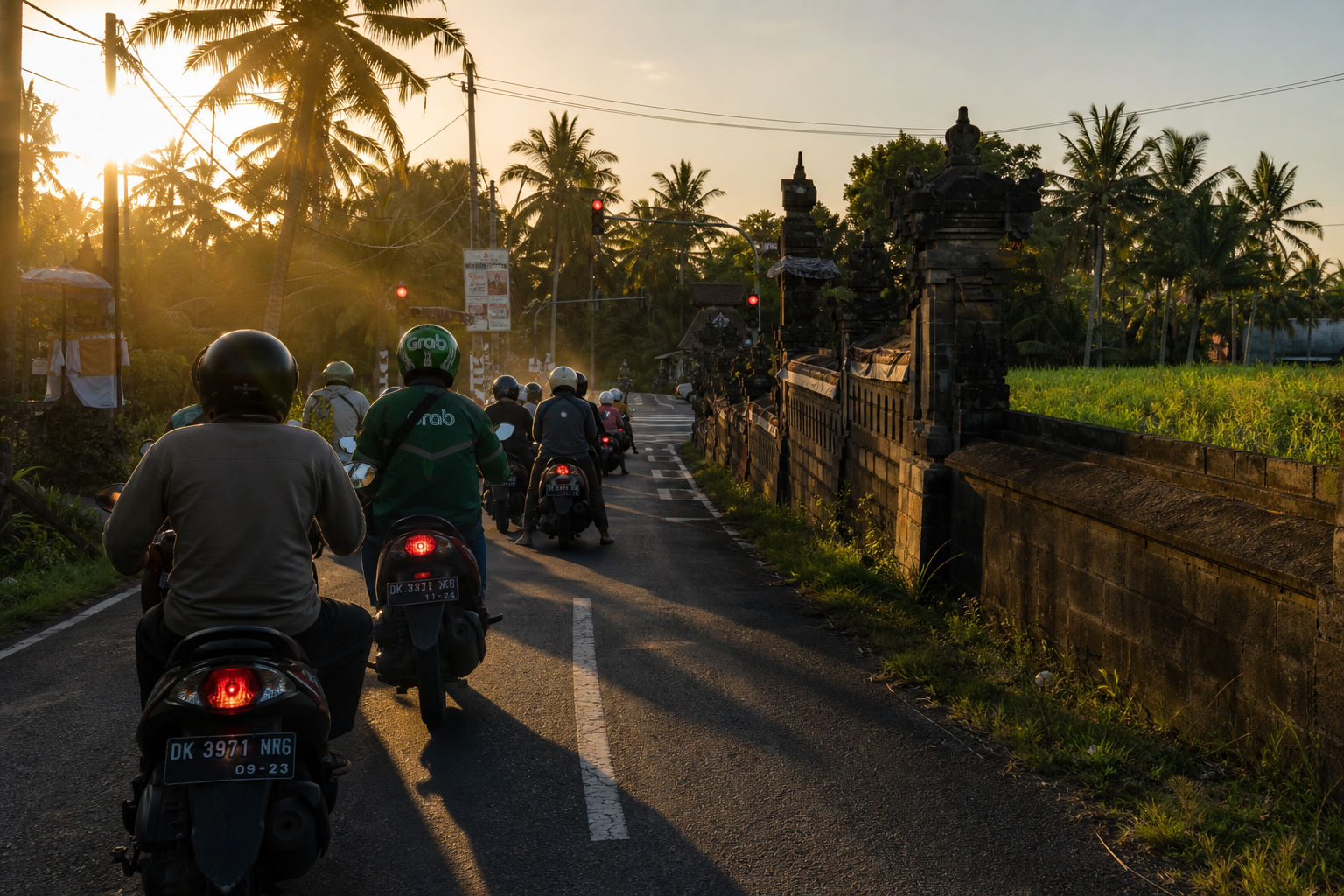
Canggu to Ubud is about 32 kilometres. Leave at seven in the morning and it takes 50 minutes. Leave at six in the evening and the same drive takes two hours and ten.
That gap is the most useful thing to know about Bali, and most itineraries written for it carry on as though it were not there. The island really is small. But the roads are two lanes wide, they run through villages instead of around them, and between five and seven in the evening they fill with scooters until nothing moves. Plan six days as if Bali were a place you could drive across on a whim and you will spend a third of the holiday looking at the same stretch of shopfront for 40 minutes.
The fix is small. Sleep in the south for the first half, sleep in Ubud for the second, and make the move once, in the middle, before the roads wake up. Six days, two hotels, one transfer. Here is how that falls out, and what is worth booking in each half.
Why the map lies
South Bali, meaning Kuta, Seminyak, Canggu and Sanur, jams from 8 to 10 in the morning and again from 5 to 7 in the evening, Monday to Friday. Friday and Sunday afternoons clog the Ubud road in both directions. The airport is roughly 38 kilometres from Ubud and that drive runs about an hour and a half on a normal day.
None of this makes Bali a bad island. It makes the one-base holiday a bad idea. Staying in Seminyak and day-tripping out to Ubud, Batur and Uluwatu in turn means three separate two-hour drives you never needed to take.
On the days you do cover ground, hire a car and driver for the whole day instead of calling a Grab each time. The economics are not close. One Grab from Canggu to Ubud runs 200,000 to 300,000 rupiah and you will want three or four hops. A full day with a driver who waits while you eat and knows which back road is moving is about ₹2,900, and it removes the worst part of Bali, which is standing on a hot verge refreshing an app.
Day one: land, go south, and stop
Delhi is roughly an eight-hour non-stop on Air India or IndiGo, and there are non-stops from Mumbai and Bengaluru too. Land in the morning and you are outside by about eleven, which is exactly when the taxi touts are at their most confident.
Book the transfer before you fly. It costs about ₹1,841 for a private car to a hotel anywhere in Bali, which is not much more than you will be talked into paying at the kerb, and it means a name board instead of a negotiation after a red-eye. Nusa Dua and Uluwatu are 40 to 60 minutes from the airport. Do not book a first night in Ubud.
Then do nothing for the rest of the day, which is the part people skip and regret. If you want one fixed thing, make it dinner on the sand at Jimbaran, ten minutes from the airport side of the peninsula. It is a tourist ritual and it is also good, because the fish is grilled in front of you and the tables sit on the beach rather than looking at it. At around ₹2,200 a head it is not the cheapest seafood on the island. It is the right first night.
Day two: the Bukit peninsula, and only the Bukit peninsula
The whole southern tip is a single loop you can do without ever joining the Denpasar traffic. Morning at Tanjung Benoa for water sports, afternoon somewhere flat, sunset at Uluwatu.
Tanjung Benoa is where Bali sells parasailing, banana boats and jet skis off one strip of calm water, and the honest description is that it is a well-run activity park rather than an adventure. Go early, around nine, before the coach groups. A starter package is about ₹1,811 and children handle it fine.
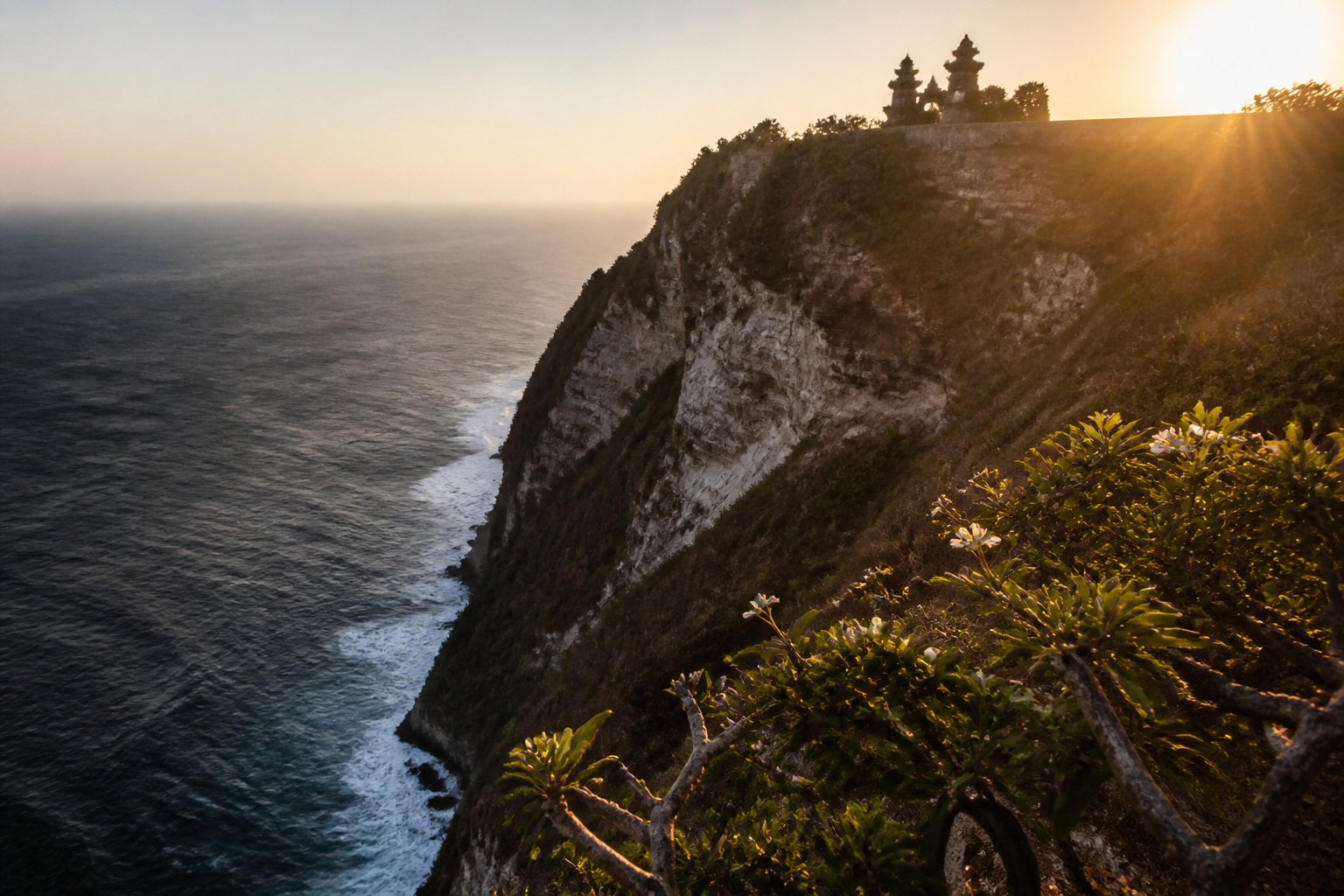
The Kecak at Uluwatu is the thing I would keep if I could keep only one evening in the south. A hundred men chanting in a ring on a clifftop while the sun goes into the Indian Ocean behind them does not photograph well and is hard to forget. Two warnings. The seats are stone benches in an open amphitheatre, so a wet evening means a wet hour. And the monkeys at that temple steal sunglasses and phones with real skill, so put everything in a bag with a zip before you walk in. Tickets are about ₹813.
Day three: Nusa Penida, if you are honest with yourself about it
Penida is the postcard and it is also a long, hard day. The boat leaves Sanur early, the crossing is 45 minutes of open water that gets rough by afternoon, and the island's roads are worse than anything on Bali. Kelingking, the cliff shaped like a dinosaur's head, is a steep descent on rough steps and a harder climb back. People do it in sandals and regret it loudly.
Book it as a full-day package rather than assembling boat, car and driver yourself. The group day trip is about ₹2,324 and is the sensible default. The speedboat version at around ₹9,133 buys a smaller group and less waiting at each viewpoint, which on a day with four stops and a four-hour round crossing is worth more than it sounds.
If anyone gets seasick, take the tablet before boarding rather than after. If the sea is being difficult the crew will say so at the pier. Believe them.
Day four: move at ten in the morning, not at four in the afternoon
This is the whole plan in one decision. Check out, put the bags in the car and leave the south between nine and half past ten, after the commute clears and before the middle of the day. You will be in Ubud inside 90 minutes. Do the same drive at five and it costs you two and a half hours.
Arrive, eat, walk the market and the Monkey Forest on foot, and take the evening gently. The Legong at Ubud Palace is the right first Ubud night: an hour of gamelan and dance in the palace courtyard in the middle of town, about ₹549, no drive involved. It is the cheapest genuinely good thing on this list. Go at seven, get there by half past six, and sit on the left if you care about seeing the musicians.
Day five: one short drive, then stay put
Everything good around Ubud sits within 30 minutes of it, which is the point of moving here.
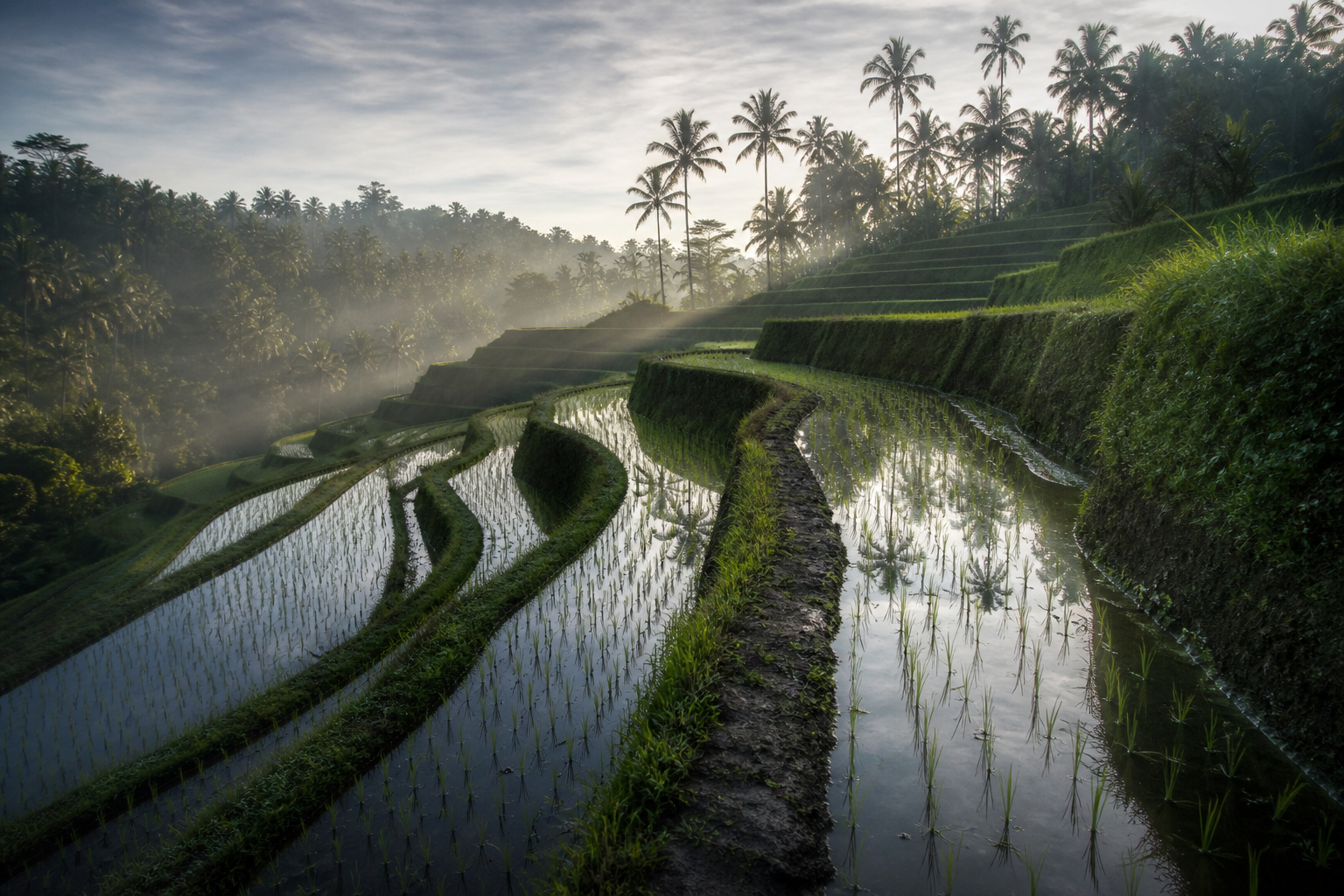
Rafting the Ayung is the pick for most people. Grade two, so it is fun rather than frightening, the gorge walls are carved with reliefs you only see from the water, and it is about ₹1,539. Families with children over seven manage it comfortably.
The swing and zipline setups are Instagram infrastructure rather than adventure, which is fine if you know that going in. At about ₹556 for a private rice terrace with a zipline and a sky bike, it is cheap enough not to matter if you use it for 40 minutes and leave. Avoid booking rafting and a swing park on the same day: they sit on opposite sides of Ubud and you will spend the gap in the car.
Day six: the one two o'clock alarm worth setting
Mount Batur is the reason to have moved to Ubud. Pickup is around two in the morning, the walk up is two hours on loose volcanic scree in the dark, and you reach the rim in time to watch the sun come up over the caldera lake with Agung and Rinjani on the horizon. It is about ₹634 with a local trekking outfit, which for a guided pre-dawn summit is close to absurd.
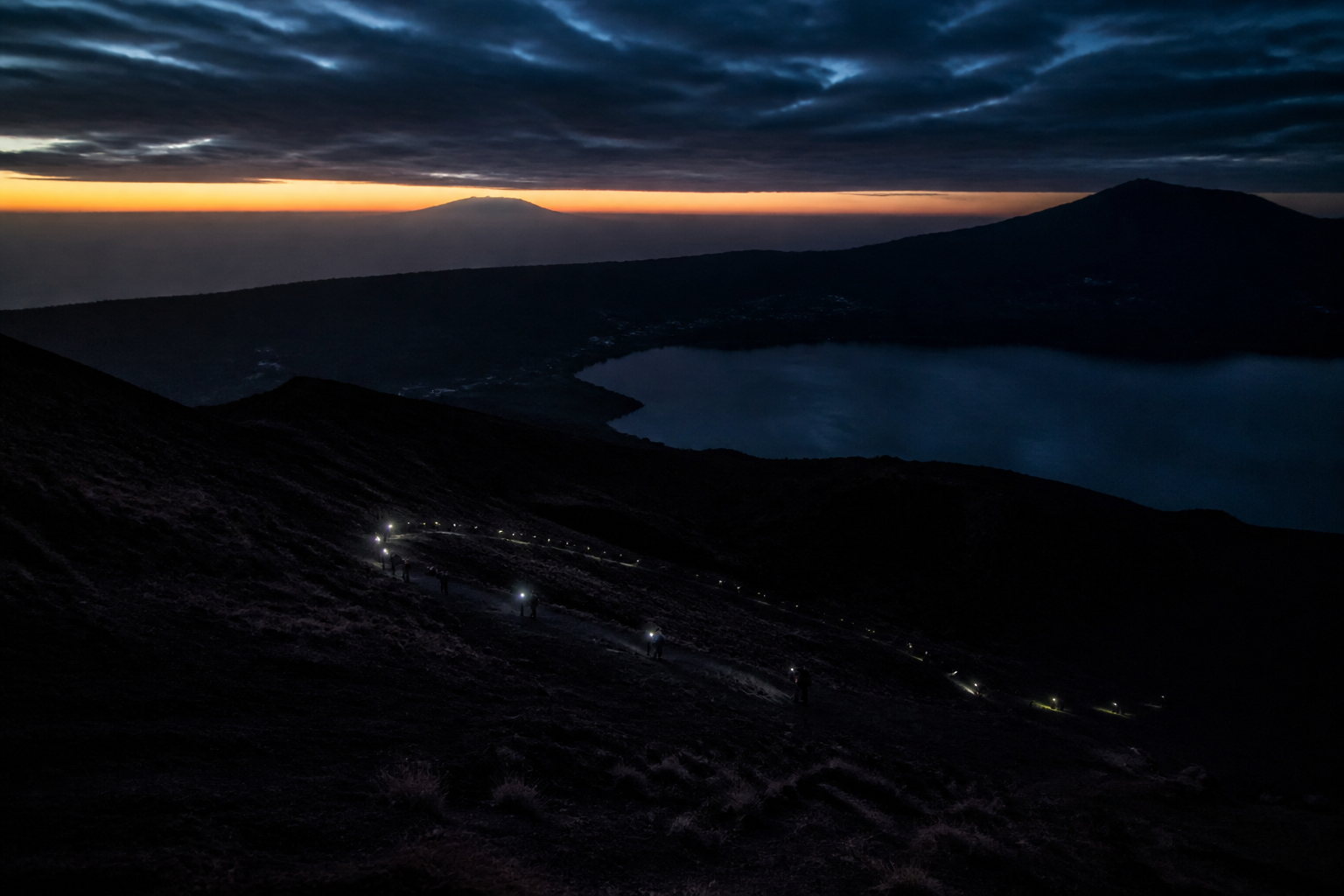
The honest warnings. It is a proper climb and the descent on loose gravel is what actually hurts. Cloud in the wet season can mean you do the whole thing and see grey. If anyone cannot manage two hours uphill, take the jeep rather than cancelling: the 4x4 version reaches a sunrise viewpoint without the climb, and the Muslim-friendly operator at about ₹3,395 includes halal meals and prayer stops, which is hard to arrange on the ground.
Come down, and go straight to the hot springs on the lake shore below rather than back to the hotel. About ₹453 for volcanic water at the foot of the mountain you just climbed, at nine in the morning, with legs that have stopped working. It is the best-timed 450 rupees on the island.
Eating, if you are vegetarian or Jain
Bali is easier than it used to be and harder than people promise. Balinese food leans on pork and shrimp paste, and terasi turns up in sambal and in vegetable dishes that read as vegetarian on the menu. Ask for it by name rather than asking whether a dish is vegetarian.
Indian restaurants have multiplied with Indian arrivals, and two of them solve different problems. Vinayak at Lippo Mall in Kuta is pure vegetarian, which takes the entire question off the table for a family travelling with grandparents. In Ubud, Ganesha ek Sanskriti will do Jain preparations without onion and garlic if you ask when you book rather than when you sit down. Both run around ₹900 a head. Neither will taste like home, and it is better to expect Bali-Indian than to be disappointed by it on night four.
What it costs before you have bought anything, and when to go
Three charges land before the holiday starts. Visa on arrival is 500,000 rupiah, roughly ₹2,655, and it buys 30 days, extendable once by another 30 for the same fee at an immigration office. Apply for the e-VOA online 7 to 14 days out and walk past the counter queue. The Bali tourist levy is 150,000 rupiah, about ₹800, paid separately through the provincial government site. The All Indonesia Arrival Card is free, compulsory, and must be filed within the 72 hours before you land, at allindonesia.imigrasi.go.id. Any site charging you for that card is not the government.
Overstaying costs 1,000,000 rupiah a day, so count from the date stamped on arrival rather than from the date on your ticket.
On the ground, budget ₹3,000 to ₹4,000 a day for a modest trip and ₹7,500 to ₹10,000 for a comfortable one, flight aside. A warung meal is about ₹240, a restaurant dinner about ₹850, an hour of massage about ₹1,000. Carry a zero-forex card, because UPI will not save you here and the usual 3.5 per cent markup adds up. If you intend to rent a scooter, carry an International Driving Permit. Police checks on the Canggu roads are routine and the fine for not having one is not.
April, May, September and October are the months to aim for: dry, without the July and August crush of Australian school holidays or the mid-December spike. The wet season from November to March is not a write-off, because the rain mostly arrives as a heavy afternoon hour rather than a grey week, though January is genuinely wet. Keep something indoors in reserve for those afternoons. Devdan at Nusa Dua, about ₹2,113, is a theatre show rather than a temple performance, and it is what rescues a washed-out day with children in tow.
One date to avoid outright. Nyepi, the Balinese day of silence, falls on 8 March in 2027, and it is not a festival you can watch. From six in the morning until six the next morning the island stops: the airport shuts for 24 hours, mobile networks go off, nobody goes outdoors, and hotel guests stay on the property with the lights low. The Ogoh-Ogoh parade the evening before, on 7 March, is worth planning around deliberately. Landing on the day itself is not possible.
Bali does not reward covering ground. It rewards picking two places to sleep and refusing to drive anywhere at six in the evening.
Everything above fits in six days because nothing in it asks you to cross the island twice. Book the transfer, book the two or three things you actually care about, and leave the rest of the afternoons empty. The parts of this holiday people remember tend to be the ones nobody scheduled.