
Abu Dhabi is not a day trip. Seven things that need you to stay the night.
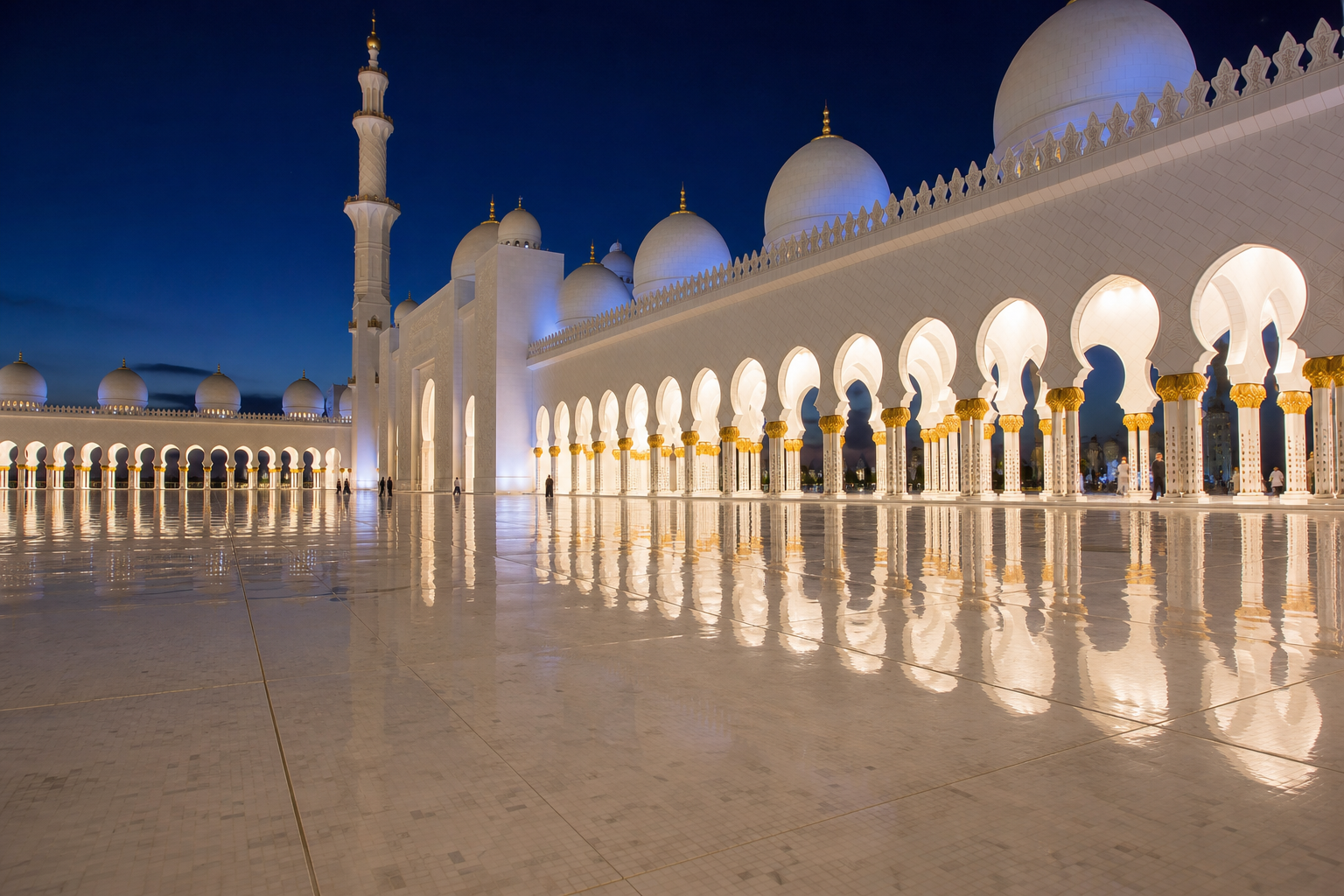
The coach leaves Dubai at eight in the morning. It reaches the Grand Mosque at about half past ten, along with every other coach. Then lunch near the Corniche, forty minutes at a viewpoint, a photo stop outside a hotel you are not going into, and you are back in Dubai by eight, having spent five of those twelve hours on the E11.
That is how most Indian visitors see Abu Dhabi, and it explains why so many of them come home calling it clean and a bit dull. Clean and a bit dull is what a day trip buys. The city keeps its best hours at either end of the day, and the coach timetable is built to miss both.
The case against the day trip, and the least bad version of it
Abu Dhabi sits about 140 km from Dubai, roughly ninety minutes by car when Sheikh Zayed Road behaves. The public bus is the honest budget route: the E101 runs from Ibn Battuta, which is on the Red Line, to Abu Dhabi Central in about an hour and forty minutes for 25 dirhams. Call it ₹600. You cannot pre-book it. You queue and pay as you board, and at busy times you will watch one bus fill up and pull out without you.
If a single day genuinely is all you have, take a guided tour instead of assembling one yourself. Not because the tour is better, but because a day trip is a logistics problem, and solving it will eat two of your twelve hours. The plain city tour is the one worth taking. It handles the mosque, the Corniche and the palace exteriors, and it does not try to bolt a theme park onto the end.
Everything below assumes you did the other thing and booked two nights. Prices are in dirhams with rupees alongside, at roughly ₹24 to the dirham.
1. The mosque at half past six, not half past ten
Sheikh Zayed Grand Mosque is the one thing every itinerary already contains, so the only useful advice left is about timing. The coaches arrive between ten and noon. Go at six in the evening instead, when the marble has cooled, the floodlights come up against a blue sky, and the courtyard is photographable without forty strangers in the frame.
One change to know about. In September the mosque introduced an entry fee for the first time: 10 dirhams for tourists, about ₹240, and 5 for UAE residents. Worshippers still enter free, as do visitors over 60. The paid extras have multiplied too, with the Light and Peace Museum and the Diya immersive experience at 25 dirhams each, or 40 for both. Skip those. The guided cultural tour of the mosque itself, which runs 30 to 45 minutes and covers the architecture properly, is still free, and it is better than anything you can buy there.
Opening is 9am to 8.30pm with last entry at eight, except Friday, when it closes between 11.30 and 2.30 for prayers. Book your access pass online before you go. Shoulders and knees covered for everyone; women are given an abaya at the entrance if needed, and the queue for it is long at peak times, which is another argument for the evening.
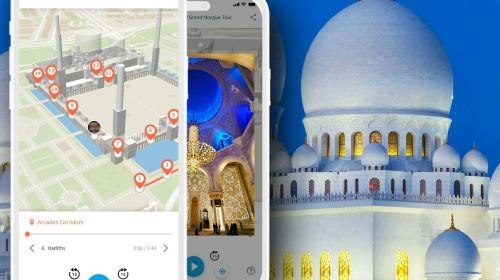
If you would rather not walk behind a guide, the audio guide app is the cheap alternative and it lets you stop where you want.
2. Saadiyat, which deserves a whole day by itself
This is the part the day trip cannot touch, and the main reason to stay. Saadiyat Island now holds enough to fill a day without repeating itself, and the two anchors want opposite ends of it.
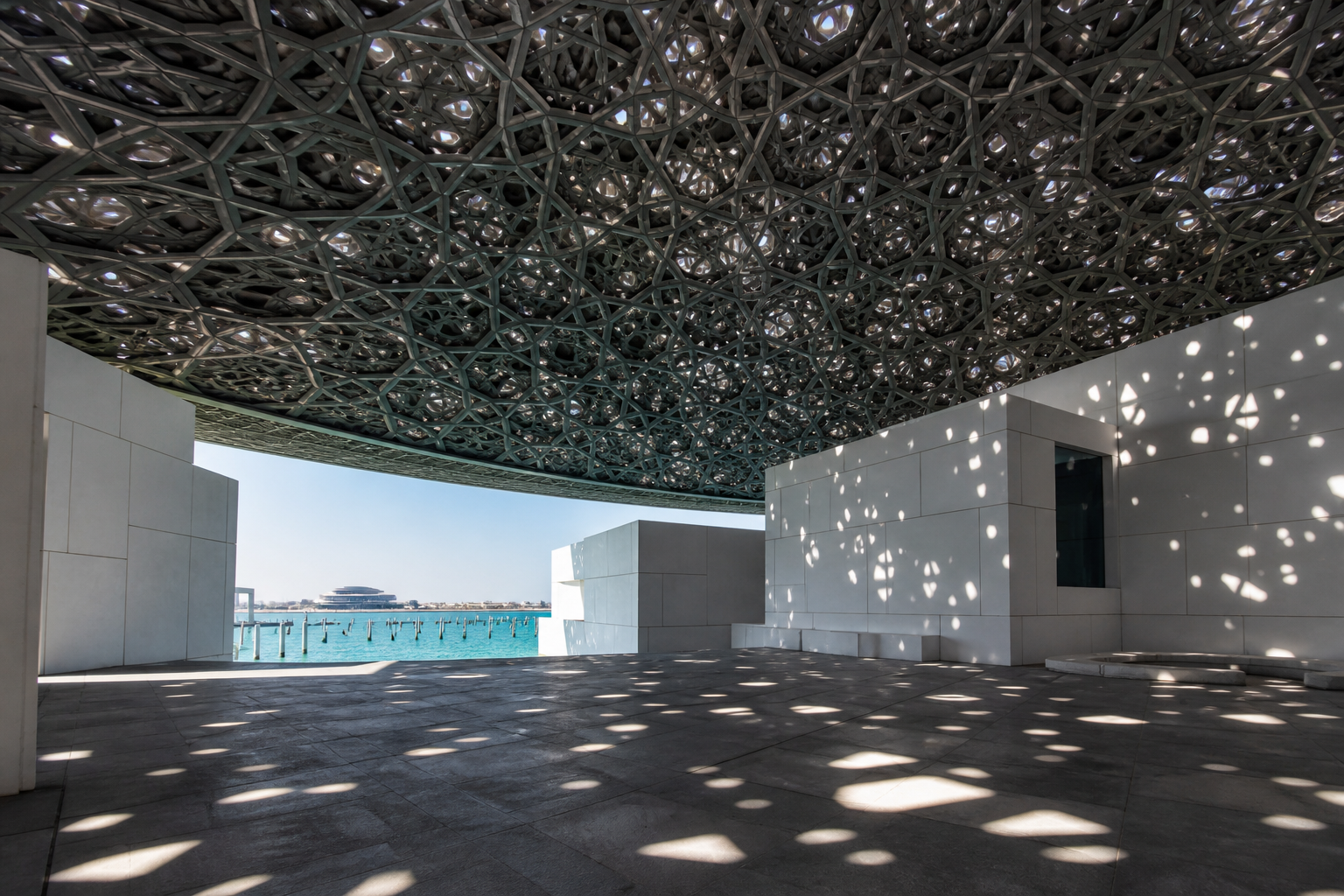
Louvre Abu Dhabi is a morning museum. The dome is perforated with thousands of openings, and the light that falls through it is the actual exhibit; you want a high sun for that, not the last hour before closing. Entry is 63 dirhams, around ₹1,500, and under-13s go free, which makes it one of the better-value family stops in the emirate. Allow two to three hours. It closes on Mondays, which catches out a lot of people, and shuts at 6.30 from Tuesday to Thursday against 8.30 from Friday to Sunday.
teamLab Phenomena, a few minutes away, is the evening half. Tickets start around 155 dirhams, roughly ₹3,700, which is not cheap, and an hour and a half is enough. Two warnings nobody puts on the ticket page: parts of it involve water and you will get damp, so leave the suede shoes at the hotel, and from Monday to Thursday under-18s have to be out by 4.30pm, which quietly rules it out as an evening activity for families on those days.
If you are doing the cultural district properly, the audio guide covers the whole area rather than one building and costs less than a coffee at either of them.
3. The palace after dark
Qasr Al Watan is a working presidential palace that opens to visitors, and the interior is genuinely worth the 65 dirhams, about ₹1,560, for the domed Great Hall alone. Children are 30.
The reason it belongs on a stay-the-night list is the Palace in Motion show, which projects the palace's own history onto its facade from 8pm. It runs about fifteen minutes and costs 25 dirhams extra for adults, 12 for children, on a separate ticket that people routinely forget to buy. Your day trip left at four.
Pair it with Qasr Al Hosn earlier in the day if you want the other half of the story. It is the oldest stone building in the city, it explains what Abu Dhabi was before the oil, and at roughly ₹730 it is the cheapest hour in this article. The contrast between the fort and the palace is the whole point; taken alone, either one is just a building.
4. Yas Island, which is two days if you have children
Yas is where the day-trip logic falls apart completely. There are four major parks within walking distance of each other, and anyone who tells you that you can do a park and the mosque and the Louvre in one day has not done any of them.
Ferrari World is the headline, and Formula Rossa earns it: 240 km/h, the fastest roller coaster in the world, fast enough that they hand out goggles because of the sand in the air. It is also over in under a minute and a half, so do not plan the day around it. The rest of the park is better than its reputation and holds a full day.
Warner Bros World is the one I would pick for an Indian family arriving in October, when it is still touching 35 degrees. It is entirely indoors and air-conditioned, which no other park here can claim. SeaWorld Abu Dhabi is the newest and the biggest single-day commitment, and it is the right answer if your children are the aquarium kind rather than the roller-coaster kind. Yas Waterworld is the one to drop if you are choosing three from four, only because you can get a good water park closer to home.
5. Driving something on the Formula 1 circuit
Yas Marina Circuit sells track time to the public on evenings when it is not hosting anything, and this is the most under-booked good thing in Abu Dhabi. The passenger runs in a GT4 or a drift taxi are the ones that get marketed, at 17,000 to 21,000 rupees. They are fun, but you are cargo.
Drive the kart instead. It costs a fraction as much, you are steering, and it runs on the circuit rather than a car park. If nobody in your group wants to drive, the standard tour walks you through the pit lane and the podium in about an hour.

6. The mangroves at first light
Abu Dhabi is built on a mangrove coast, and this is the part of the emirate that has nothing to do with malls or marble. Jubail Mangrove Park has a two-kilometre boardwalk running low through the trees for 15 dirhams, about ₹360, which makes it the cheapest thing on this list and, on a still morning, close to the best.
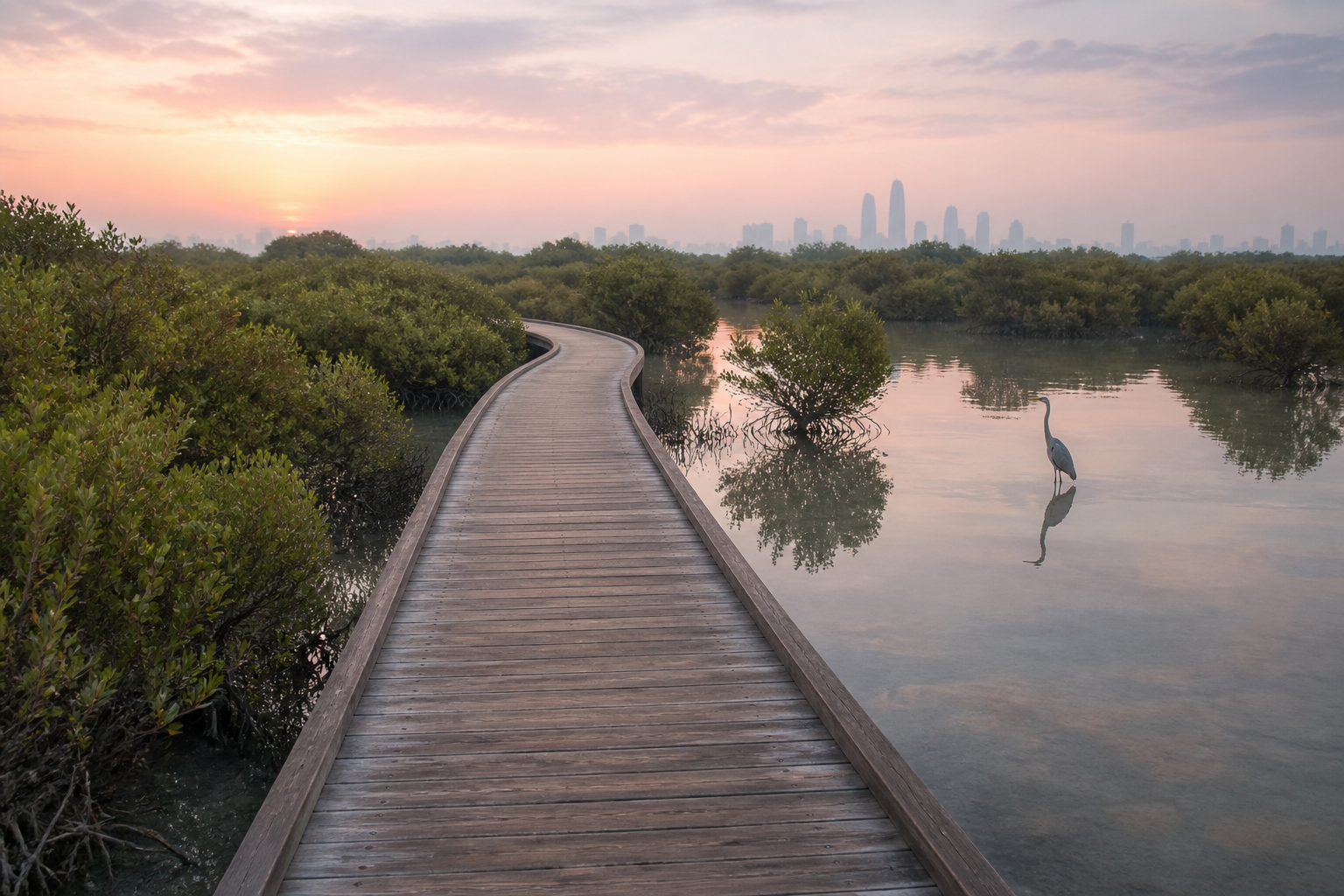
Go early. The light is better, the heat has not arrived, and the herons are still feeding. Kayaking is bookable separately, including night tours, and has to be arranged in advance rather than on the day. The park is about half an hour by taxi from downtown, which is why the coaches never come.
This is also the one activity here that an older parent travelling with you will actually enjoy. Flat, shaded in stretches, and no queue.
7. The desert on this side of the border, and Al Ain
Dubai sells you an evening desert safari. Abu Dhabi's version runs at sunrise, and it is the better trade: the light is extraordinary, the dunes are empty, and you are not doing dune-bashing on a full stomach after a buffet.

The honest warning on all dune-bashing, wherever you book it: it is rougher than the photographs suggest, and if anyone in your car gets travel sick, say so at pickup. Most operators will take you to the camp by road instead.
The other thing two nights buys you is Al Ain, an hour and a half inland, which almost no visitor from Dubai ever reaches. It is the green one: an oasis irrigated by falaj channels thousands of years old, a fort, and the mountain road up Jebel Hafeet, one of the best drives in the country. A long day, and worth it if you already know you do not need another mall.
What Indian travellers should sort out first
- Visa. Most Indian passport holders need an e-visa arranged before flying. The 14-day visa on arrival, extendable by another 14, applies only if you hold a valid US visit visa, a US Green Card, or an EU visit or residence visa. A change announced in July removes UK residence visas from that list, though the start date has not been published. Check your own category rather than a friend's; the rules differ by document, not by nationality.
- When to go. November to March. October still averages a high near 35 degrees, which is why so many Diwali trips end up indoors. By December the average high is 25, and January is 23, which is the pleasant end of the year and also the expensive end.
- Flights. Etihad flies direct to Abu Dhabi from several Indian metros including Mumbai, Delhi, Chennai and Kochi, at roughly three to four hours. Flying into Abu Dhabi rather than Dubai and taking the bus back the other way at the end is usually cheaper than the reverse, and it saves you the E11 twice.
- Food. Pure-vegetarian Indian restaurants are easy to find in the older parts of the city, and a Jain request is understood at most of them without a discussion. The weak spot is inside the paid attractions. The theme parks, the museums and the desert camps run on grilled meat and pasta, so eat properly before you go in rather than hoping.
- Getting around. Taxis are metered and cheap by Dubai standards, and you will use them constantly. The attractions are spread across three islands and the distances defeat walking.
If you want one thing in your ear while you work out the geography, the self-guided audio tour is a reasonable substitute for a guide on your first afternoon.
Two nights is the whole argument. It buys you a sunrise, an evening, and the hour after the coaches have gone home.
None of this makes Abu Dhabi a more exciting city than Dubai, and anyone who tells you otherwise is selling something. It is a quieter place, and it rewards a slower visit in a way its neighbour does not. The day trip is not a small version of that. It is a different thing entirely, and it is the reason the city has a reputation it does not deserve.