
Da Nang is five areas and Hoi An is a sixth. October's 650 mm decides which ones you book.
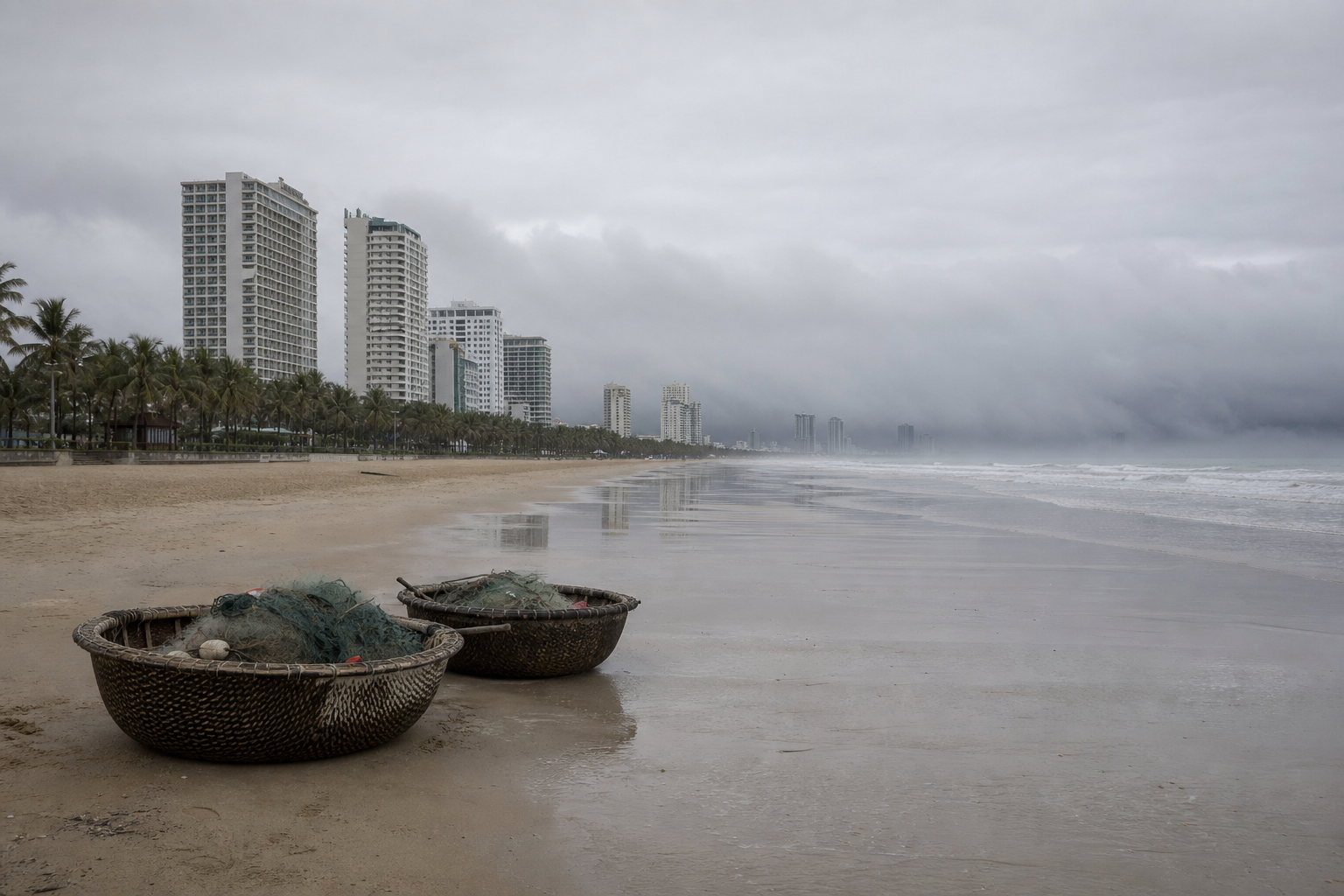
Da Nang is thirty kilometres of beach with a city behind it and the airport in the middle. Nothing is far from anything else, which is why people underestimate how much the choice of area matters. Two hotels four kilometres apart give you different holidays.
The map changed last year. On 16 June 2025 Quang Nam province was folded into Da Nang, and Hoi An stopped being a town in the next province along. It is now a ward of Da Nang City. The road is unchanged, still thirty kilometres and thirty to forty-five minutes, but a trip sold as two destinations is officially one. Plan it by area rather than by day. Six areas, and the weather decides the order.
650 mm is the number to plan around
October is the wettest month of Da Nang's year by a wide margin: about 650 mm of rain, against 430 in November, 215 in December and 85 in January. Daytime temperatures drop to a pleasant 26 degrees. The rain is not drizzle. It arrives in walls, and the typhoon window here runs from early September to about 10 December. For sun, go late January to mid-March.
Hoi An's flooding is a separate problem from the rain falling on you. The old town sits on the Thu Bon delta, and what puts water in Bach Dang street is heavy rain in the mountains upriver a day earlier. A normal flood is thirty to sixty centimetres through the riverside lanes and drains a day or two after the upstream rain stops. The 2025 floods put up to a metre and a half through the centre. The national meteorological centre is forecasting a milder season this year, which is a forecast and not a promise. In exchange you get the cheapest hotel rates of the year, 30 to 50 per cent below the dry season.
The practical consequence is that your evenings need a roof. Both of the big staged shows have one.
The Heritage Show at ₹539 is the one to book first, because it costs what dinner costs and you lose little if the weather kills the evening. Charming Danang at ₹1,560 is the bigger production with the water stage, and the better buy with children between six and twelve, who sit through spectacle and fidget through anything subtler. Book either for a weeknight and keep Friday to Sunday free for the bridge.
My Khe and An Thuong: the beach strip
This is where most visitors sleep. My Khe runs for kilometres with the hotel towers set back behind a line of palms, and An Thuong is the grid of lanes immediately inland, full of cafes, tailors and massage shops.
The sea is warm all year, between about 23 and 30 degrees, and in October it is also the problem. Monsoon swell puts rip currents along this beach and the flags go red often. Swim in the morning if at all, between the flags, and keep children out on a red-flag day. The sunrise walk is the better reason to stay here, with the sand busy from half past five. The rest of the time, An Thuong is where the rain money goes.
₹476 for a spa and massage session, the best value on this page and the obvious answer to an afternoon when the sky has closed in. One caution. Vietnamese massage is firmer than most Indian spa treatments and the hot-stone work is genuinely hot, so say what pressure you want at the start rather than enduring it politely for an hour.
Hai Chau: the river side
West of the Han river is the working city: Han Market, the riverfront promenade, and the Dragon Bridge, which breathes fire and then sprays water on Friday, Saturday and Sunday at nine in the evening for about fifteen minutes. It is free. Light rain does not stop it, heavy rain can. Stand on the street-level promenade rather than the bridge walkway unless you want the water at close range, and if nobody has gathered by half past eight it is off.
Hai Chau is also where coffee stops being a souvenir and becomes a method.
₹1,283 for two hours on phin filter, egg coffee and coconut coffee. It is for one specific person: the traveller who has decided to carry beans home and does not know what to buy. Everyone else learns most of it from two glasses of ca phe sua da at a riverside stall for about ₹130.
Non Nuoc and the Marble Mountains: the best cheap half day
Nine kilometres south of My Khe, nineteen north of Hoi An. Five limestone outcrops with Buddhist cave temples cut into them and a stone-carving village at the base. Entry is 40,000 dong, about ₹148, and the lift up the first mountain another 15,000, roughly ₹55. Gates open at seven.
Go at half past seven, for Huyen Khong cave, where a hole in the roof drops a shaft of light onto the Buddha at the back between roughly eight and ten. It works in October because caves do not care about rain.
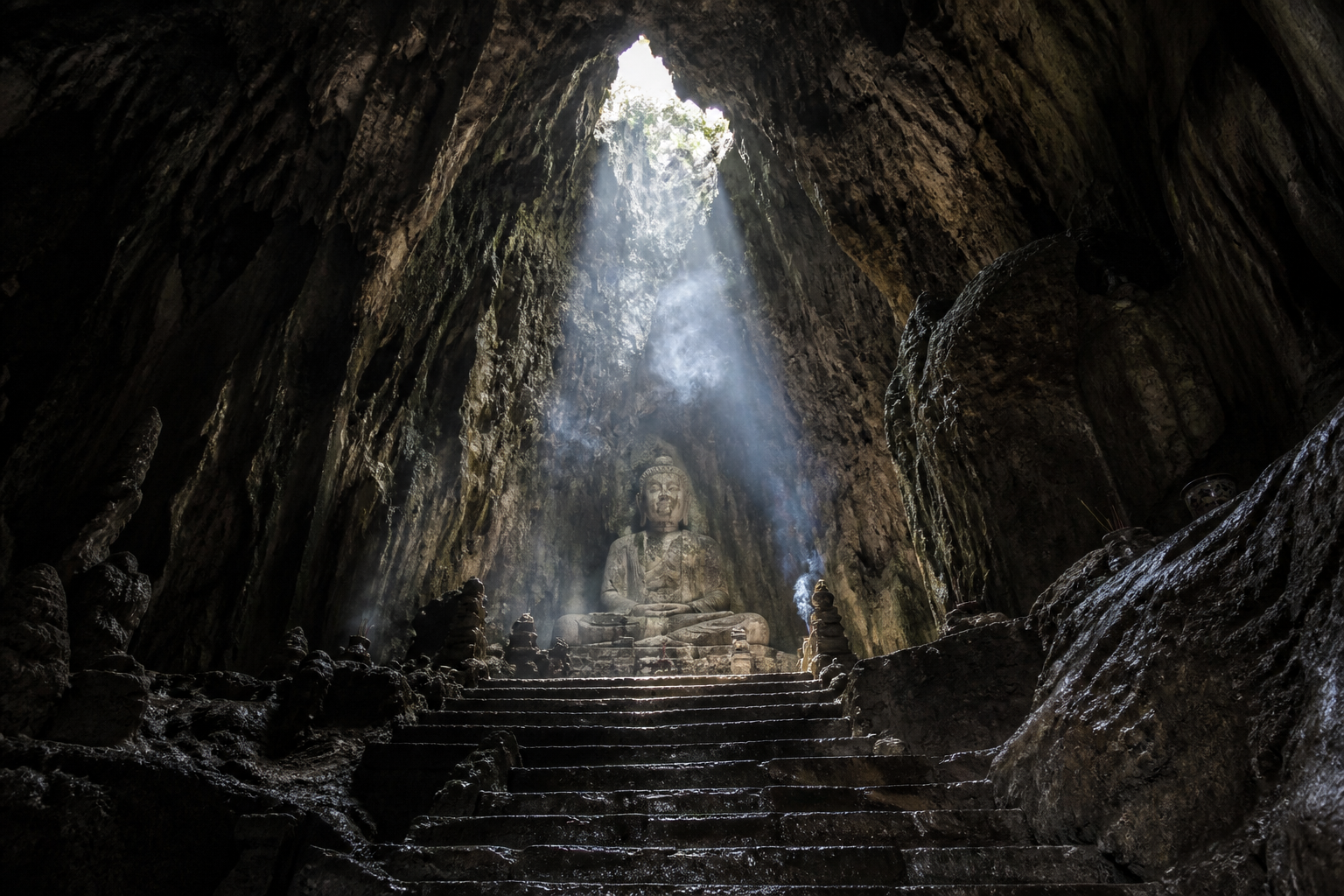
Wear closed shoes with grip. The steps are worn marble, wet most of the year and permanently wet in this season, and sandals on them are how people get hurt. Budget three hours, and expect to be asked to buy marble on the way out, firmly and repeatedly.
₹1,741 pairs the caves in the morning with Hoi An for the lanterns after dark, the most efficient booking here if you are based in Da Nang with one spare day. It is the wrong booking if you already sleep in Hoi An, because an hour of it is spent driving you back where you came from.
Ba Na Hills: the only area the rain cannot reach
Forty-five to sixty minutes west by road, then a cable car to about 1,400 metres, where there is a French-styled village, a funfair, gardens and the stone-hands bridge that put Da Nang on half the travel internet. The summit often sits above the cloud layer, so a flat grey morning at sea level can be sunshine up there. It can also be fog thick enough to photograph the inside of a cloud, and nobody can tell you which in advance.
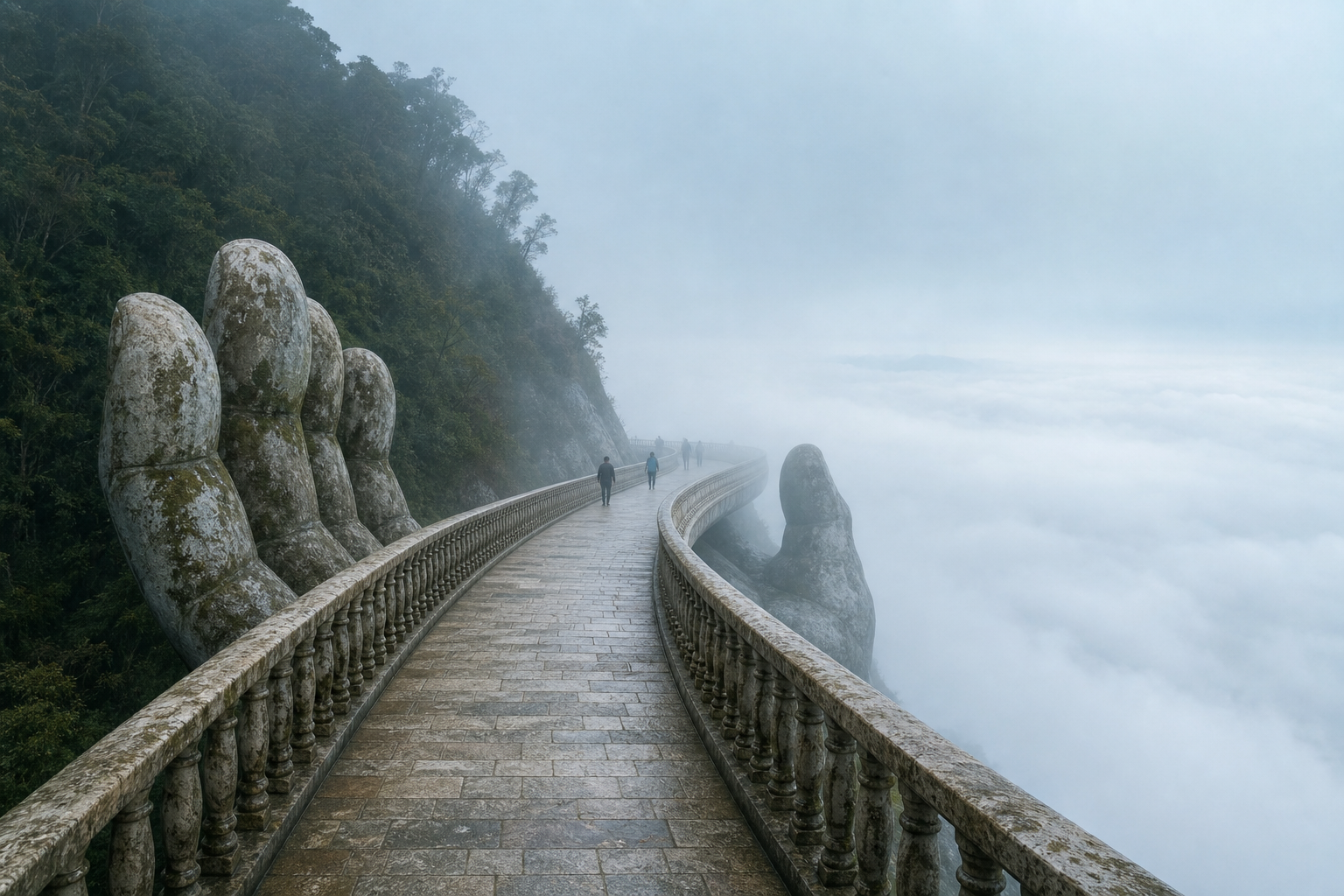
Take the first cable car of the day and leave by two. The site runs roughly eight in the morning to ten at night, needs six to nine hours, and fills with coach groups from half past ten.
Read the inclusions before you pay. The listing opens at ₹282 and the full adult gate ticket is 1,000,000 dong, about ₹3,690. Those numbers are too far apart to describe the same thing, so check which cable car, which entry and which date your voucher covers rather than assuming the cheapest line buys the whole mountain. Bring a light jacket either way. It is five or six degrees cooler up there, and the wine cellar and some rides charge separately.
Hoi An: a ward of Da Nang that behaves like a different country
The old town ticket is 120,000 dong, about ₹443, sold from eleven booths, valid 24 hours, and good for five heritage houses of your choice. Children between one metre and 1.4 metres pay 50,000. Keep the stub on you: checks happen, and arguing costs another 120,000.
Lantern nights fall on the fourteenth of each lunar month, when the old town switches off its electric lighting between about half past five and ten. The next ones are Friday 23 October, Sunday 22 November and Tuesday 22 December. They are also the nights a full moon brings spring tides to a river that is already high, so the October date is the likeliest to be a flood rather than a festival. Watch from the Cam Nam bank if the Bach Dang quay is shoulder to shoulder.

Three ways to spend a day in the town, suiting three different people.
The walking tour with banh mi and coffee at ₹1,987 is for people sleeping in Hoi An, because it moves at the speed of the town and the eating is the point. The coconut forest day at ₹2,897 is the better buy from a Da Nang hotel: the seat-in coach runs daily whether or not anybody else books, and the basket boats through the water palms give you something the old town cannot. The ao dai photoshoot at ₹7,178 is the dearest thing on this page by a distance, and it only makes sense if somebody has already said out loud that they want these photographs. On impulse it becomes an hour of being posed in the heat.
Two bookings to leave until March
Both are good. Neither is good now, and an honest guide in October says so.
Cham Island at ₹2,446 is snorkelling and clear water, and the boats are suspended through much of October and stop almost entirely by December because the sea is too rough. Operators keep selling the date and cancel on the morning. March to August, or not at all. Hoa Phu Thanh rafting at ₹525 is the cheapest fun in the province, best from March to October, up a river thirty-five kilometres west fed by the same mountain rain that floods Hoi An. In a wet week it is shut, or no longer gentle.
The long day, and the practical stuff
Hue is the one excursion worth leaving the Da Nang strip for, over the Hai Van pass, about two and a half hours each way.
₹3,523 for the citadel, the royal tombs and the pass. It earns the money only if imperial Vietnamese history interests somebody in the group. If it does not, this is five or six hours in a vehicle for a photograph of a gate, and the Marble Mountains and Hoi An cost less than half as much for the same day.
- Indians need an e-visa. US$25 single entry, US$50 multiple, up to 90 days, from evisa.gov.vn and nowhere else, three to seven working days. Agents charge two to three times that for the same document. Count your stay from the dates on the visa, not from your flights.
- Vietjet flies Da Nang nonstop from Delhi, Mumbai, Ahmedabad and Kochi. Its filed cuts for late October to early December leave all four alone, though Ho Chi Minh City to Ahmedabad drops to five or six weekly. From any other Indian city you connect through Bangkok, Singapore or Kuala Lumpur.
- Airport to Hoi An is thirty kilometres. Grab quotes 250,000 to 350,000 dong, about ₹920 to ₹1,290, fixed before you get in. Yellow bus number 1 does it for 30,000, roughly ₹110, in sixty to ninety minutes. Many Hoi An hotels include the transfer on a two-night stay, so ask first.
- Vegetarian food is easy in both towns and Jain food needs a phone call. Hoi An has three pure-vegetarian Indian kitchens near the old town, and Maruthi Bhojan on Nguyen Duy Hieu lists Jain dishes outright. Give any of them 24 hours for no-onion-no-garlic cooking, because walking in and asking does not work. In Vietnamese restaurants assume fish sauce and a pork or beef broth unless you have established otherwise, including in dishes described as vegetable.
- Diwali is Sunday 8 November, in the second-wettest month and the back half of the flood season. Take a room above the ground floor, away from Bach Dang, and leave one day unallocated.
A flooded week in Hoi An is a bad day and a cheap hotel, not a cancelled holiday. The water goes down faster than a refund comes through.
Pick the area first and the rest follows. An Thuong if you want mornings on the sand and somewhere to eat at eleven at night, Hai Chau to be near the market and the bridge, Hoi An itself if the old town is why you came, river and all. Then build the days around the two things that ignore the weather: a cave full of light at eight in the morning, and a mountain above the clouds.
Rainfall figures are long-term monthly averages. Fees, hours and lantern dates were read on 4 October 2026 from Hoi An and Da Nang listings, the Ba Na Hills operator and the Marble Mountains site; flood depths and the milder-season forecast from Vietnamese flood reporting and the national meteorological centre; schedule changes from Vietjet's filings. Dong is converted at about 271 to the rupee, which moves. Prices come from the live catalogue, so trust your voucher over this page.