
Kuala Lumpur rewards staying put. One neighbourhood a day.
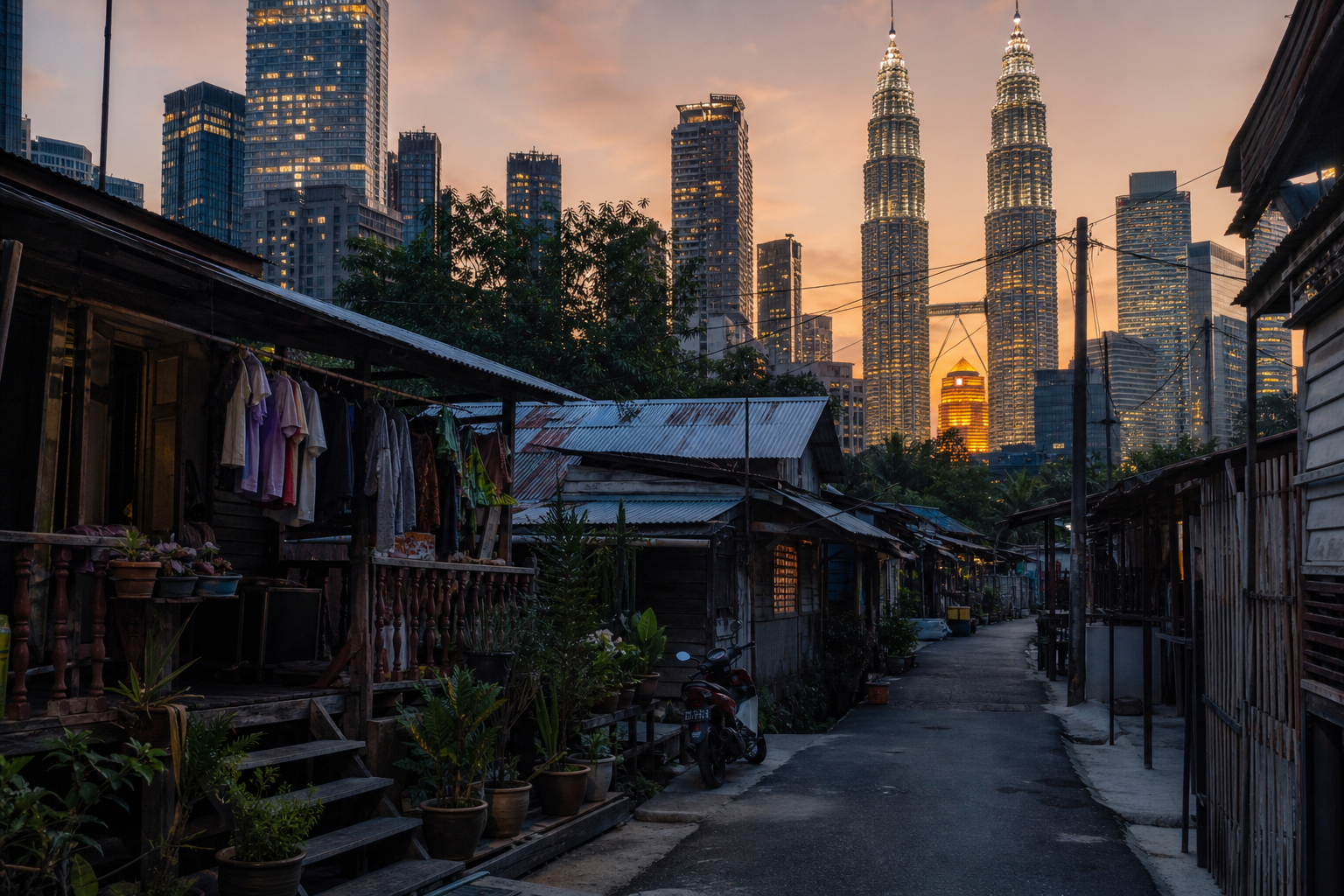
Kuala Lumpur is small on a map and slow in practice. The towers, the caves, the old shophouses, the Little India everyone tells you about: they sit in separate pockets, and the standard visitor spends four days crossing the city and back, paying for the same journey twice. A taxi that should take eighteen minutes takes fifty at six in the evening. The map makes it all look adjacent.
Pick a neighbourhood, take the whole day there, go home when it gets dark. That is how KL was built, a string of small towns that grew into each other and never quite merged. One reason to go this year rather than next: Indians currently enter Malaysia without a visa for up to 30 days, and that exemption expires on 31 December 2026. Nothing has been announced about what replaces it.
KLCC, and the fifteen-minute rule that catches people out
The Petronas Twin Towers are why most first-timers come, and the visit is more tightly run than it looks. Entry is by timed slot. Non-Malaysian adults pay RM98, roughly ₹2,300 at about ₹23.4 to the ringgit; children aged two to twelve and anyone over sixty pay RM50. Open Tuesday to Sunday, 9am to 9pm, last admission 8.30pm, and on Mondays only the second and fourth of the month. You are told to be at the entry point fifteen minutes before your slot. Turn up at your slot time and you can be refused, with no refund. People lose the ticket this way regularly.
Worth knowing first: from inside the towers you cannot see the towers. If the photograph you want is of the two of them lit up, that shot comes from the park behind, or from KL Tower on the hill, whose deck sits at 276 metres with a glass box at 300.
The rest of KLCC is a park and a very large mall, which sounds like filler until the first afternoon downpour. Aquaria sits under the convention centre, ninety minutes end to end, and its walk-through tunnel holds small children still longer than anything else in the city. Keep it for the hour the sky opens.
Brickfields, where you will eat better than you expect to
There is a fair objection to spending a Malaysian afternoon in Little India. You did not fly five hours to eat sambar. Go anyway.
Malaysian Indian food is not Indian food. Banana leaf rice here is its own tradition, a hundred and fifty years deep, built by Tamil families who arrived under the British and cooked with what Malaysia grew. There is also a practical reason. If anyone in your group is strictly vegetarian or Jain, Brickfields is where the trip stops being a negotiation. Pure vegetarian kitchens sit along Jalan Tun Sambanthan, several run to temple rules, and no onion and no garlic is a request the staff have heard before rather than one they have to think about.
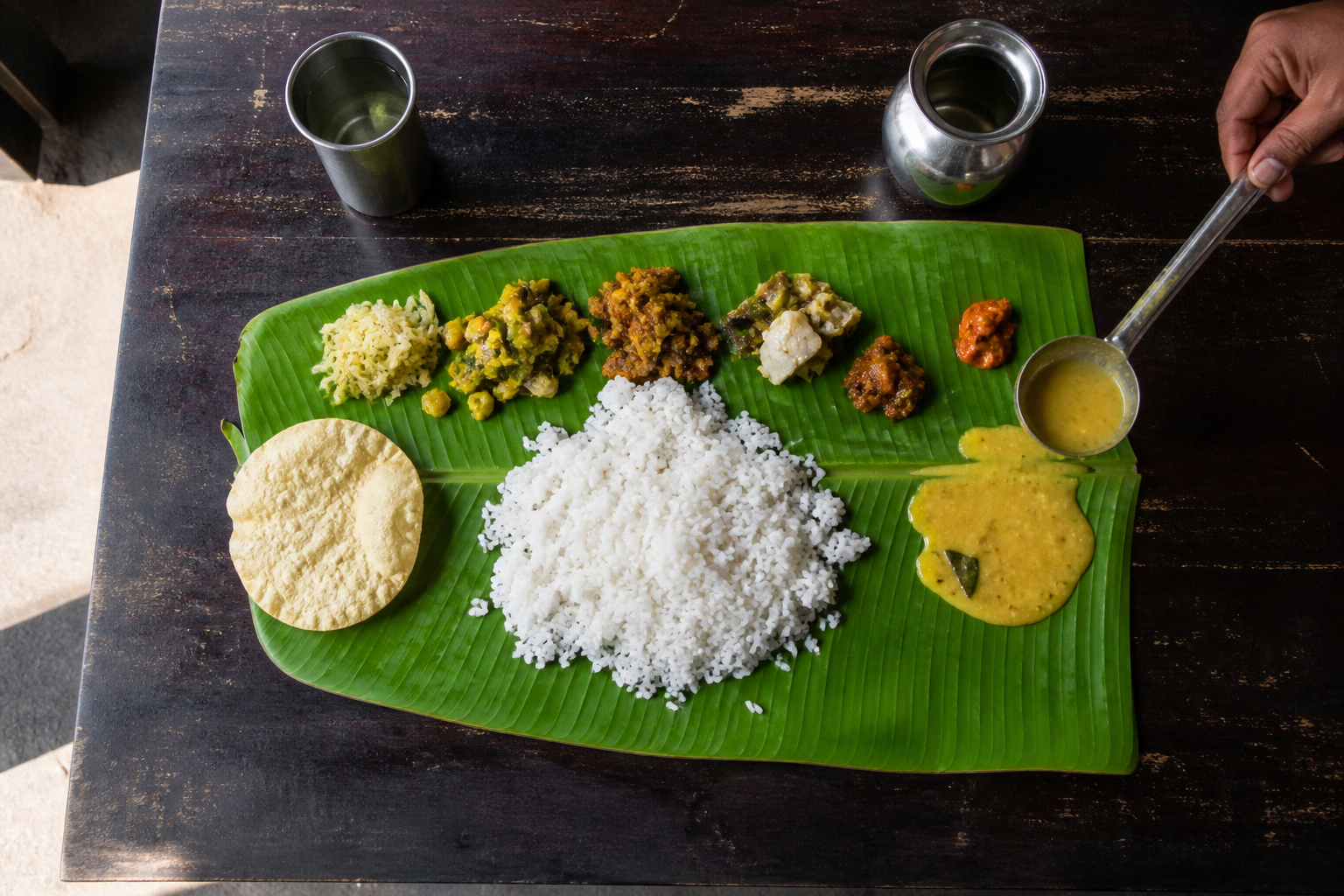
Elsewhere in the city, vegetarian takes more care than at home. Belacan, a fermented shrimp paste, is the base of a great deal of Malay and Nyonya cooking and is rarely named on a menu. Asking for no meat will not remove it. Chinese coffee shops usually have one vegetarian stall, often marked in green, and the temple-style versions are strict, with no egg and no allium. That stall is the reliable answer.
The half-day communities tour is the version worth booking rather than wandering. It crosses the Indian, Chinese and Malay quarters in one afternoon with someone explaining why they sit where they do, which beats a self-guided loop of sari shops.

Chinatown and the old core, on foot and after dark
This is the only part of KL that rewards walking, and the part most tours give forty minutes. Petaling Street, the Sri Mahamariamman temple, the Guan Di temple next door, Central Market, then the meeting of the two rivers where tin prospectors founded the city in the 1850s. Three hours at a slow pace.
Do it in the evening. Daytime here is brutal, 32 to 34 degrees with humidity on top, and the hawker stalls that make the area interesting do not start until six. Chinatown at two in the afternoon is a hot walk past shuttered shops. At eight it is the reason you came.
Three ways to spend that evening. The Chinatown food crawl suits people who want to eat properly and do not mind plastic stools. The six-bite tour is gentler, better if your stomach is cautious on the first night. The night cultural walk is for anyone who would rather understand the temples and shophouses than eat their way down the street.
Batu Caves, at seven in the morning or not at all
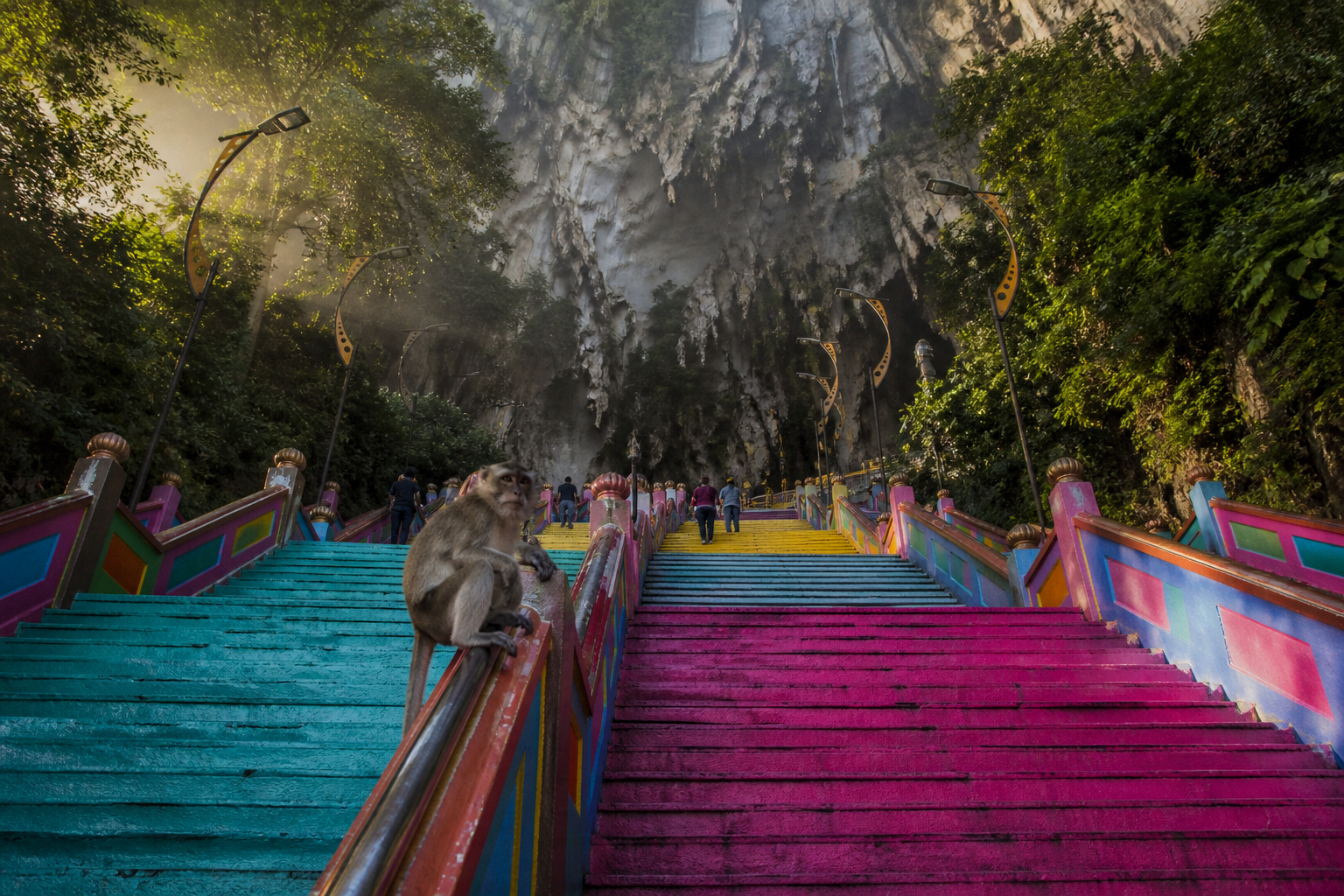
Thirteen kilometres north, a limestone hill with a Murugan temple inside it and 272 painted steps to the entrance. The Temple Cave is free; the Ramayana Cave alongside is about RM5 and the Cave Villa around RM15. The site runs roughly 7am to 9pm, and the KTM Komuter from KL Sentral starts around 5.30am, which makes the early visit easy to arrange.
Take the early one. Between seven and nine the steps are cool and the crowd is mostly people who have come to pray. By eleven it is a queue on a staircase in direct sun, and the climb is steeper than the photographs suggest. Shoulders and knees covered, and sarongs are rented at the bottom if you arrive in shorts.
One date, if your plans are flexible. Thaipusam falls on Friday 22 January 2027, a public holiday in Kuala Lumpur, Selangor, Penang and several other states. Batu Caves is the centre of it and well over a million people attend. That is either the most extraordinary thing you will see in Malaysia or completely the wrong day to bring elderly parents up 272 steps. There is no middle version, so decide before you book.
Three ways to go, and they are not close substitutes. The shared half-day is the cheapest sensible option and gets you back before the day is gone. The religious-sites tour pairs the caves with the National Mosque and a banana leaf lunch, the tidiest single day here. The three-in-one runs long, out to Bukit Melawati and then the mangroves at dusk for the fireflies, and only suits people happy to be out late.
The Lake Gardens, for the morning nobody plans
West of Chinatown, on the hill behind the National Mosque, sits the old botanical park and inside it the KL Bird Park: a walk-in aviary under netting, with hornbills and flamingos and enough shade to survive midday. What it is good for is the morning when the group has stopped agreeing about what to do and somebody needs two flat green hours that suit a five-year-old and a seventy-year-old equally. Ninety minutes is enough. Go at opening.
Genting, for the temperature more than the rides
An hour north and 1,700 metres up, Genting Highlands runs ten to fifteen degrees cooler than the city, which after three days of KL humidity is the point. The Awana SkyWay covers 2.8 kilometres and 620 metres of climb in about ten minutes, running 7am to 11pm. A standard gondola is RM11 one way or RM19 return, roughly ₹260 and ₹445; the glass-floor cabin is RM29 or RM48 online. Your ticket includes a free stop at Chin Swee station for the temple built into the hillside, and most people ride straight past it, which wastes the best thing on the mountain.
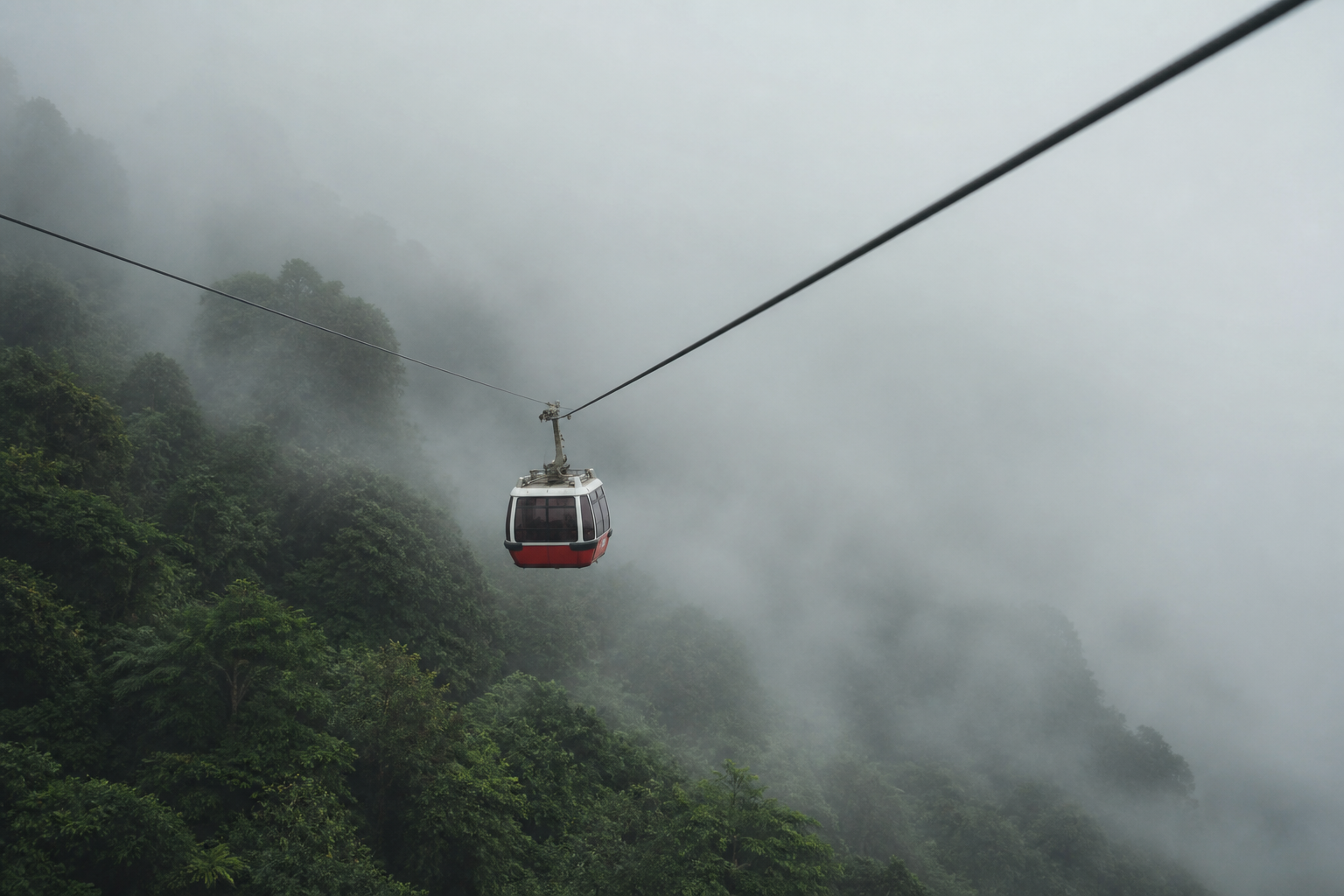
Be clear about what is at the top: a casino resort with malls, hotels and a theme park attached, not a hill station. If you want quiet mountains, this is the wrong mountain. If you have children who have been marched around temples for three days, it is the right one. Gambling is legal here for non-Muslims and the casino floor is hard to avoid in places, worth knowing if you are travelling with family who would rather not walk through it.
Putrajaya, the strange one
Forty minutes south, the federal government built itself a new administrative capital in the 1990s on empty land around an artificial lake: wide boulevards, a pink granite mosque on the water, and almost nobody on the pavements. Go late in the afternoon, when the light goes warm and the heat drops. The lake cruise is the right way to see it, because the buildings were laid out to be looked at from the water. Skip it on a three-day trip. Take it if you have five and have run out of KL.
Petaling Jaya, if the children have had enough
The suburbs west of the city are where Malaysian families go on a Saturday, and they are the pressure valve on a trip heavy with temples and towers. Sunway Lagoon is the big one, a water park and a dry park on one ticket. Give it a real half day rather than the tail end of one, and go on a weekday. Weekends there are busy in a way that is hard to enjoy.
The practical half hour before you book
- Visa-free, but only until the end of this year. Indian passport holders get up to 30 days without a visa for tourism and business, through 31 December 2026. Work and study still need a visa. If your trip lands in early 2027, check the rules again before paying for anything.
- The arrival card is free and catches people at check-in. The Malaysia Digital Arrival Card must be submitted online within three days of arrival, and airlines check it before issuing a boarding pass. It costs nothing on the official immigration portal, so a site asking for your card details is the wrong site. Indian passports are not on the autogate list: your first entry is at a manual counter for biometrics, later visits can use the gates.
- Money: one ringgit is about ₹23.4. Cards work almost everywhere indoors. Hawker stalls and older coffee shops are cash or local QR only, so carry small notes for anything eaten standing up.
- The trains are good and the pass is cheap. LRT, MRT and monorail cover most of this guide. The MyCity pass gives unlimited rides for RM20 for one day or RM35 for three, dropping to RM10 and RM25 if you already have a Touch 'n Go card. Buy it at any station counter. Grab handles the rest, and is the sane way to travel between six and eight in the evening.
- Flights are short and frequent. Delhi to KL is about five and a half hours nonstop, with AirAsia X, Malaysia Airlines, Batik Air and Air India running around 31 flights a week between them.
- Book around Deepavali rather than into it. It is a public holiday in Malaysia, on Sunday 8 November 2026 with Monday the 9th off in most states. Brickfields is wonderful that week and everything else is shut or full.
- It rains most months, briefly. Highs of 31 to 34 degrees all year and a short violent downpour most afternoons. February, June, July and August are driest, October and November wettest. Plan indoor things for the afternoons rather than trying to dodge it.
- Check the haze index before booking outdoor days. Smoke from Indonesian fires drifts across the region between roughly August and October. On 4 September this year Malaysia declared an air quality emergency in Serian, in Sarawak, where the index hit 521, with Kuching at 311 and schools shut. That was Borneo rather than the peninsula, but KL gets a milder version most years. The national air pollutant index is free and published daily. If anyone in your group has asthma, read it before committing to a cable car or a climb.
- Book the ride from the airport in advance. KLIA is about 55 kilometres out, and KLIA Ekspres reaches KL Sentral in under thirty minutes. Arranging a car at one in the morning after a five-hour flight is how people pay three times the fare.
Four neighbourhoods done properly beats nine landmarks seen from the back of a car. KL does not reward a checklist, and its traffic will punish you for trying.
The trip that works here looks lazy on paper. One area a day, a long lunch through the worst of the heat, out again at five when the city turns pleasant. You will see fewer things and remember more of them, and you will not spend a quarter of your holiday on a flyover watching the meter.