
Saigon is a morning city. Four days, planned around the heat.
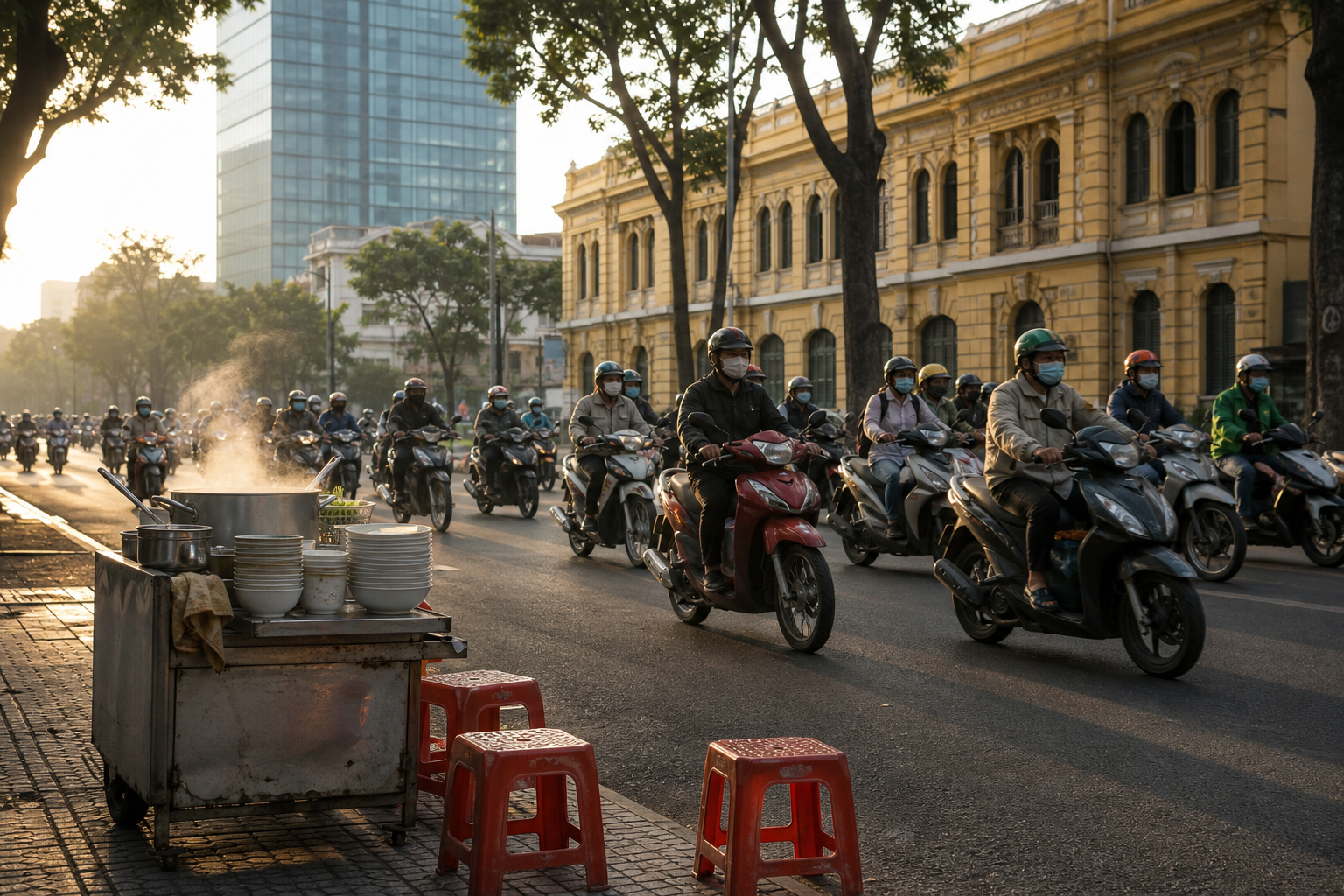
Most Saigon itineraries are a list of sights in the order they appear on a map. The city does not cooperate. Between about eleven and three, being outdoors here stops being sightseeing and becomes something you get through. March, April and May push towards 38°C. In the wet months, roughly May to November, the rain arrives in the late afternoon, hammers down for an hour or two, and stops.
So the four days below are built around hours rather than around a map. Outdoors early, indoors in the middle, back out after six. December to April is the dry stretch and the window most Indian families travel in. December mornings start as low as 17°C, the only time of year the city feels cool.
Your hotel's address may not match your map
On 1 July 2025 Ho Chi Minh City stopped having districts. The numbered system every guidebook and hotel listing has used for decades was replaced by 168 commune-level units, 102 of them inside the old city. Old District 1 is now four wards: Sài Gòn, Bến Thành, Tân Định and Cầu Ông Lãnh. Old District 2 became An Khánh. Chợ Lớn, the Chinatown, is a ward name in its own right.
The same reform folded Bình Dương and Bà Rịa-Vũng Tàu provinces into the city, roughly tripling its area and taking the population from 9.9 million to over 14 million. Vũng Tàu, the beach two hours away, is now legally part of Ho Chi Minh City.
At street level the effect is small and annoying. Hotels still advertise as District 1 because that is what people search for, while your booking confirmation may carry a ward name your map app has never heard of. Carry the street address and number, not the district.
Flights from India tend to land at Tân Sơn Nhất late at night, which is when this bites: an unfamiliar address, no Vietnamese SIM yet, and a taxi queue. There is no metro to the airport. Book the car before you fly.
Day one is over by eleven
Be at the War Remnants Museum on Võ Văn Tần when it opens at 7.30. Entry is 40,000 dong, about ₹147, and with 4,500 square metres indoors and another 3,000 outside, two to three hours is realistic. Go in warned: the Agent Orange and torture rooms are graphic enough that adults walk out. It is not a museum for young children, and not one to attempt at four in the afternoon. The ticket counter shuts at 17.00.
Independence Palace is a fifteen-minute walk away and opens at 7.00. Two tickets are sold and the cheap one is a trap. 40,000 dong (₹147) gets you the palace. 80,000 (₹293) adds the Norodom Palace exhibition in the basement annexe, which is the better half of the visit and the part that explains what you are standing in. Pay the extra ₹146.
A guide is worth it on a first morning. Neither building explains itself, and the museum is hard to read without someone supplying the chronology.
Travelling with parents who will not walk between stops in this humidity? Take the driven half-day instead. Same ground, air-conditioned seat, finished before the heat.
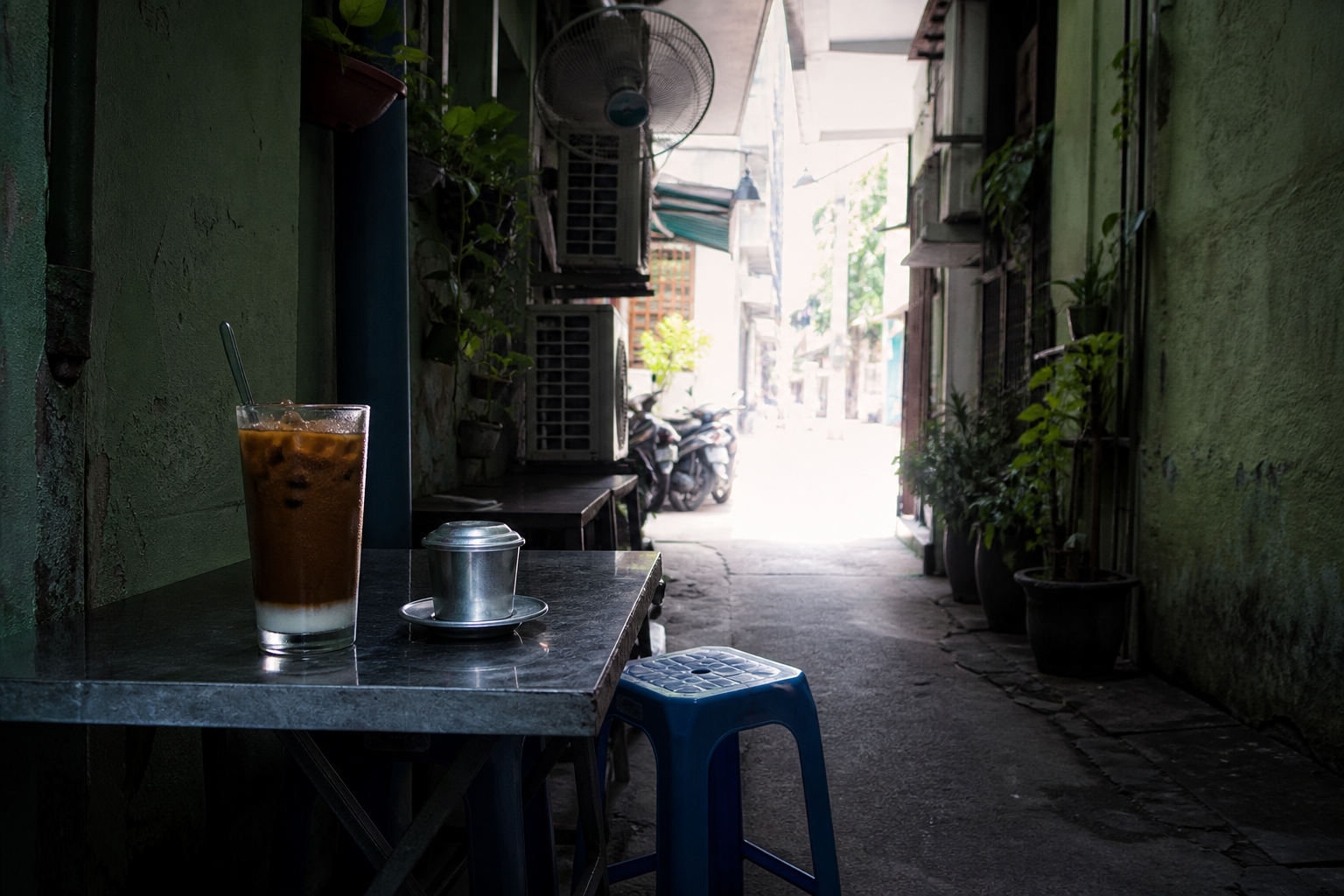
Then stop. From eleven to three, plan indoor things and stop apologising for it. Saigon's alley cafés exist because everyone here already knows the middle of the day is unusable.
Metro Line 1 runs from Bến Thành to Suối Tiên and is the cheapest air conditioning in the city: 14 stations, the first three underground, trains roughly every ten minutes from 5am to 10pm and later from Friday to Sunday. A single ride is 7,000 to 20,000 dong (₹26 to ₹73), a day pass 40,000 (₹147), three days 90,000 (₹330). Tap a contactless Visa or Mastercard at the gate, and tap out as well as in, because the fare depends on distance.
Day two: Cu Chi in the morning, nothing after it
Two tunnel sites take visitors and tours do not always say which one you are buying. Bến Đình is about 50 km from the centre, costs 110,000 dong (₹403) and absorbs most of the coach traffic. Bến Đước is 70 km out, costs 90,000 (₹330), covers more ground and has been rebuilt less for visitors. Both open 8.00 to 17.00.
The crawl sections are hot, narrow and dark. Anyone claustrophobic should say so before going underground rather than after. There is a live firing range on site and the noise of it carries across the complex the whole time you are there.
Take the earliest departure offered. By eleven the tunnels are full and the air in them has stopped moving.
At around ₹537 the coach trip is the sensible purchase. The speedboat runs about ₹10,349, nineteen times more, and what you are buying is the journey: up the Saigon River instead of two hours each way on a highway, and back in the city by early afternoon. Worth it if your days are short or your patience for Vietnamese traffic is shorter.
Day three: the Mekong, and what the day trip actually contains
The standard Mekong day runs about nine hours, a large share of it a coach on a highway. The itinerary includes a coconut candy workshop and a honey farm where somebody will sell you things. The part you came for, a rowed sampan on a narrow canal under the palms, is about twenty minutes.
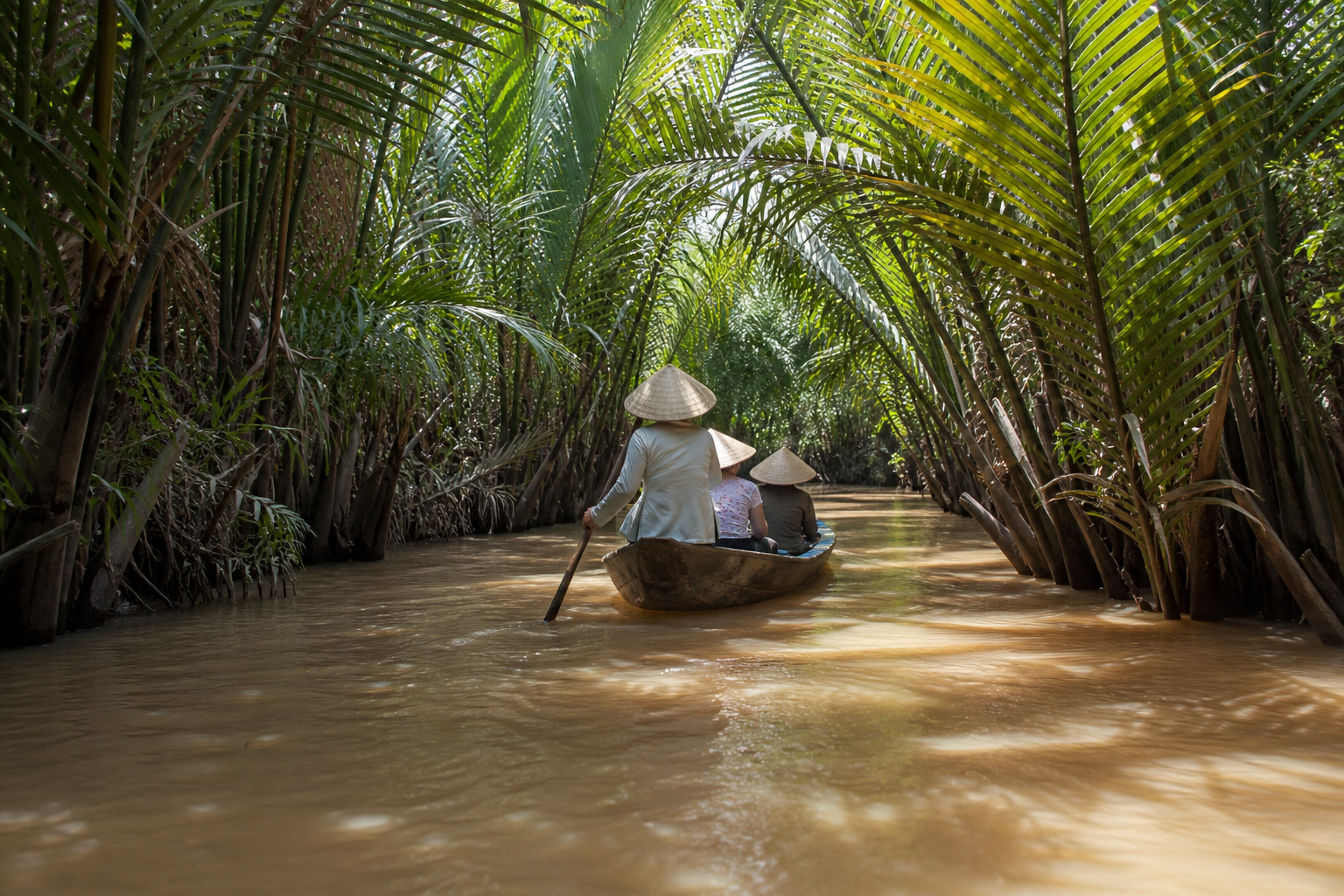
Knowing that ratio before you book is the whole trick, and it is also the argument for the overnight. Staying at Cần Thơ puts you at the Cái Răng floating market at dawn, when it is a working wholesale market rather than a performance. By nine it is winding down, which is roughly when the day trippers from Saigon arrive.
The day tour at about ₹537 is right if the delta is one line on a longer list. The two-day version is around ₹722, which is a strange amount of value, and it is the only way to see the floating market properly. If you have the night, spend it.
Day four: Chợ Lớn, which most itineraries cut
Chợ Lớn is the old Chinese quarter and the half day I would protect if something had to go. Temples with incense coils the size of car tyres hanging from the rafters, whole streets given over to dried herbs, and Bình Tây market, which sells to shopkeepers rather than to tourists.
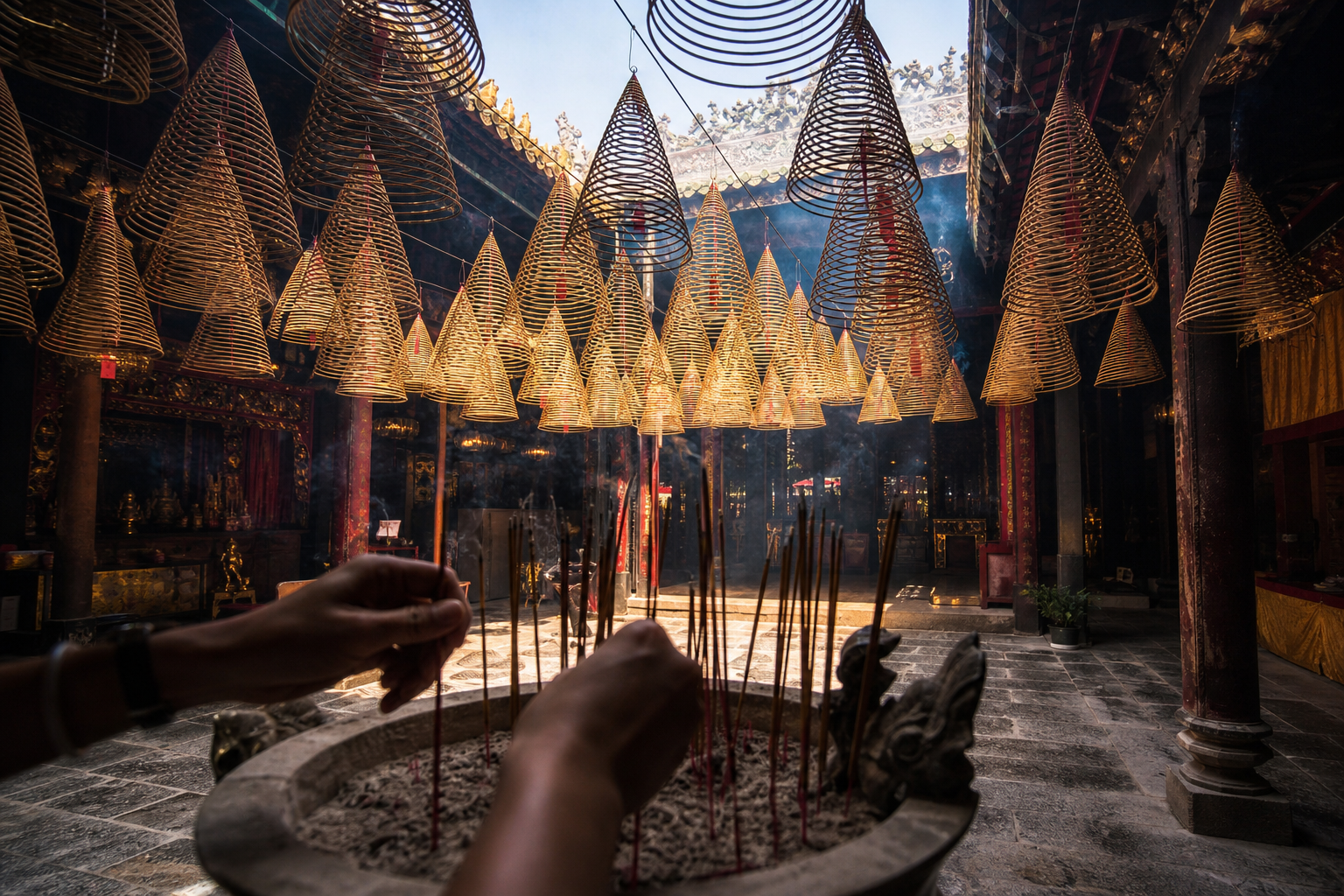
Go late in the afternoon. The light through the open temple roofs is better, the heat has broken, and you can walk from there into dinner instead of back to the hotel to recover.
The buggy run at about ₹1,443 is the one to take. Chợ Lớn is spread out, the streets are narrow, and an open electric buggy solves the distance without sealing you behind glass. The full-day version at around ₹3,958 bolts Chợ Lớn onto the central sights, useful only if you skipped day one.
The view, and the two hours worth paying for it
Landmark 81 is 461 metres tall and the SkyView deck occupies floors 79 to 81, with an open terrace at the top. Weekday adult entry is 300,000 dong (₹1,100). At weekends and on holidays it goes to 500,000 (₹1,834), a 67 per cent surcharge for the same lift. Children under 100 cm are free. Open 10.00 to 21.30.
Go between 4.30 and 7pm and one ticket buys the river in daylight, the sunset and the city lit. Turn up at noon and you have paid full price for haze.
The Bitexco Skydeck is about ₹821, lower, older, and central rather than across the river. If you are staying downtown and want forty minutes and a view, it is the better Tuesday evening. For the photograph, pay for the taller one on a weekday.
A fifth day, now that the sea is inside the city limits
Since the merger Vũng Tàu is administratively part of Ho Chi Minh City, which makes the beach a municipal amenity on paper and a day trip in practice. The fast ferry leaves Bạch Đằng pier at 10B Tôn Đức Thắng and takes about two hours twenty, at 200,000 dong on weekdays and 250,000 at weekends (₹734 to ₹917). Since the Long Thành expressway opened the road takes about the same, so choose the ferry for the river rather than the speed.
Cần Giờ is the closer option: mangrove forest, a monkey island and a boat, back in time for dinner.
Vũng Tàu at around ₹537 is the better buy if you want sea and a seafood lunch. Cần Giờ at about ₹2,763 costs five times more for a shorter day, and the monkeys at the reserve are practised thieves, so it earns its place only if mangroves genuinely interest you.
Eating vegetarian, and the two words that do the work
The word is chay. Anywhere signed cơm chay or quán chay is a Buddhist vegetarian kitchen, and the ones clustered near pagodas in the old Districts 3 and 10 will feed you rice and two or three vegetable dishes for 60,000 to 100,000 dong (₹220 to ₹367). Hum Vegetarian is the sit-down version at 250,000 to 450,000 (₹917 to ₹1,650). Phở chay uses mushroom broth; ordinary phở does not, whatever you ask for.
The second phrase matters if you are Jain: không hành tỏi, no onion and no garlic. Temple chay kitchens already cook that way. Ganesh, Baba's Kitchen, Namaste and Saigon Indian are all in the old District 1 and will do a Jain menu on request, though ring ahead rather than arriving and hoping. Fish sauce is what catches people out, because it goes into dishes described as vegetable and is invisible once it is in.
A morning at the market with someone who can read the stalls fixes this for the rest of the trip.
The practical half hour before you book
- The visa is a government website. Vietnam's e-visa runs at evisa.gov.vn, is valid up to 90 days, and costs USD 25 single entry or USD 50 multiple. Indians are not visa-exempt, whatever a Facebook group told you. Apply a fortnight out.
- The direct flights are better than you think. VietJet alone runs ten India to Vietnam routes and 78 flights a week, linking six Indian cities to Hanoi, Da Nang and Ho Chi Minh City. Hyderabad to Saigon started on 18 March 2025, Tuesdays and Saturdays, and Bengaluru the next day, Mondays, Wednesdays and Fridays.
- Money: drop three zeros, multiply by 3.7. One rupee is about 273 dong, so 100,000 dong is roughly ₹367.
- Get a local SIM or eSIM at the airport. Grab is how you move around and it wants a Vietnamese number. Sorting it at 1am on arrival is worse than sorting it now.
- Tet 2027 falls on Saturday 6 February. The core days are 6 to 8 February, and day trips, cooking classes and family restaurants stop. Hotels and convenience stores stay open on reduced hours. The Ministry of Labour publishes the official holiday dates in October or November, so if your February trip lands near that week, wait for the announcement before booking tours.
- Do not rent a scooter. Vietnam recognises international driving permits issued under the 1968 Vienna Convention and India issues the 1949 Geneva one. Rental shops will hand you a bike anyway. Your insurer will not follow.
- Eat at the busy stall. Turnover is the only food safety signal that works, and a guided first night teaches you which stalls to trust for the rest of the week.
The mistake is rarely picking the wrong sights. It is scheduling the right ones for one in the afternoon, then wondering why four days in Saigon felt like an endurance event.
Run the days on the city's clock and four of them go a long way. Nothing above asks anyone to get up at five or give anything up, and the fifth day, if you have it, ends at a beach the government has decided is part of town.