
Vietnam tightened its paperwork on 15 September. The fine at the far end of it is ₹1.47 lakh.
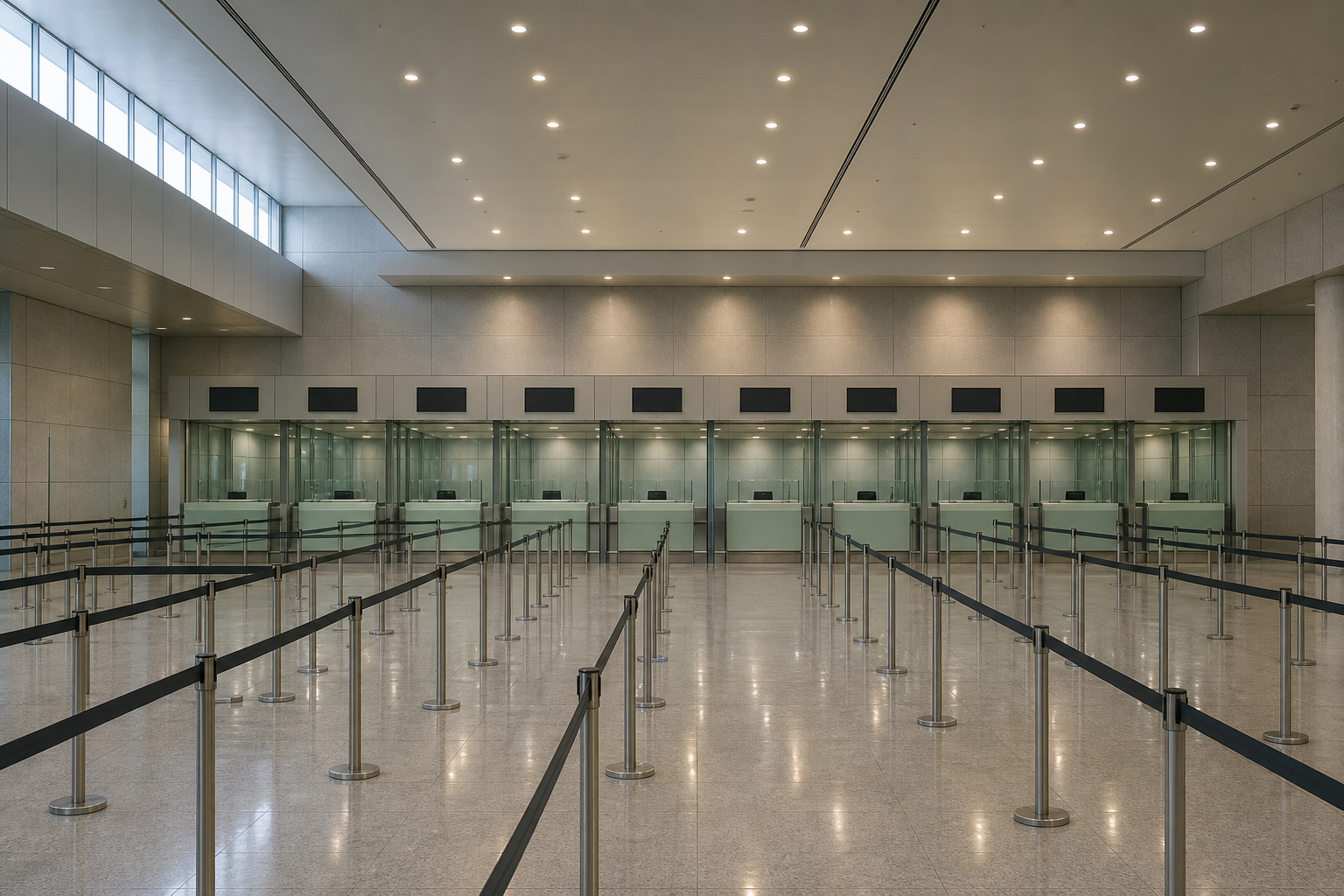
A Vietnamese decree came into force on 15 September, and if you fly to Hanoi next month you will not notice it. No new form at the counter, no new fee, and the e-visa costs what it cost last week.
What Decree 286/2026 does is connect the databases. Until this month Vietnam's framework for keeping track of foreign visitors was Decree 64 of 2015, and it had no specific provision for people arriving on an e-visa or under a visa waiver. That is now almost every tourist in the country. It was the one category nobody had written rules for, and the new decree writes them.
What the decree says
Article 9 requires ministries and provincial authorities to exchange information with immigration about e-visa and visa-exempt arrivals: visas issued, work permits, business and investment registration, professional licences, and attendance at conferences. The Ministry of Foreign Affairs has to update the national immigration database immediately after issuing a visa, or within five working days where the technical infrastructure is not there yet.
The part that touches a tourist is shorter. Sponsoring organisations now have to work with accommodation providers so temporary residence declarations actually get filed. Article 11 tells government agencies to cooperate with immigration when an e-visa or visa-exempt visitor breaks the law.
That is the whole of it, and it is administrative plumbing. Plumbing would not be worth writing about if the penalties at the other end of the pipe had not changed nine months earlier.
The numbers that make it matter
Decree 282 came into force on 15 December 2025 and reset what an overstay costs. Viet Nam News published the bands. Under 16 days is 500,000 to 2 million dong. Sixteen days to under 30 is 5 to 10 million. Thirty to under 60 days goes to 15 million, 60 to under 90 to 20 million, and it climbs from there to 40 million dong for an overstay of a year or more.
At roughly 271 dong to the rupee this week, that runs from about ₹1,845 to about ₹1.47 lakh. The band an Indian traveller could plausibly land in is the first one, the accidental few days, at ₹1,845 to ₹7,380 and a warning. The band nobody plans for is the second. Sixteen days over becomes ₹18,450 to ₹36,900 and a deportation review, and the jump between the two is almost tenfold for one extra day.
Decree 59, in force since 1 April 2026, sets out how deportation then works. Vietnam Briefing reports that the decision has to be served at least 48 hours before enforcement and that your lawful property has to be returned before you go. Viet Nam News also reported that authorities reminded hotels and employers of their duty to check residence documents and report suspected overstays, and that failing to do so can bring penalties on the host.
Together the three point the same way. The fines went up in December. The deportation procedure was formalised in April. This month the records started moving between the offices that would notice.
If you are flying from India
Indians are not on Vietnam's visa exemption list. Hanoi floated dropping visas for Indian and Chinese citizens in 2023 and it has not happened. So you arrive on an e-visa, which is exactly the category this decree was written for.
The e-visa costs US$25 for single entry and US$50 for multiple entry, allows up to 90 days, and is applied for at evisa.gov.vn. Nowhere else. Processing normally takes three to seven working days.
Two traps in that. The first is that the e-visa carries fixed dates, so your permission to stay ends on the expiry date printed on it rather than 90 days after you land. Apply in October, arrive in December, and you have lost the difference. Count from the document, not from the flight.
The second is the temporary residence declaration, which is your host's job and not yours. Registered hotels file it as routine. Small guesthouses, family homestays and short-let apartments are where it gets skipped, and closing that gap is what the 15 September decree is for. Under Decree 282 the guest is liable too, at ₹1,845 to ₹7,380 for sleeping somewhere that never declared you.

Tan Son Nhat wants a form before you board
Separate from all of this, and easy to miss: since 15 April 2026, foreign nationals and overseas Vietnamese arriving at Tan Son Nhat in Ho Chi Minh City on a visa have to complete a pre-arrival declaration online and show a QR code at immigration. The Singapore consulate in the city gives the portal as prearrival.immigration.gov.vn. Transit passengers are exempt.
It applies to that one airport, which is precisely why people get caught by it. Fly into Hanoi and you do nothing. Fly into Saigon on the same kind of ticket and you need the code. The official position is that skipping it means slower processing rather than refusal, but a long queue at six in the morning after a red-eye is its own penalty. Fill it in before you leave India.
If you are landing there anyway, the two viewing decks are the cheapest way to read the city's shape before you walk it. Saigon Skydeck at ₹821 is the better value of the pair. Landmark 81 at ₹1,580 is taller and bundles in a VR section I would skip, though the view north along the river is worth paying for. Go about an hour before sunset.
What to do about it
- Apply at evisa.gov.vn and pay US$25 or US$50 there. Agent sites charging three times that are selling you a form you can fill in yourself.
- Photograph the expiry date on the e-visa and set a reminder two days before it. Not two days before your flight home. They are often different dates.
- Ask any guesthouse or homestay in writing, when you book, whether they register foreign guests with the local police. A booking platform listing is not an answer.
- Arriving at Tan Son Nhat, do the pre-arrival form at prearrival.immigration.gov.vn and screenshot the QR code. Airport wifi is not a plan.
- Needing longer than the e-visa allows means extending through immigration before it expires. No version of this gets sorted at the airport on the way out.
What is still unclear
The decree's own text allows five working days in place of real time where the infrastructure is not ready, so real-time data sharing describes an intention more than a present condition. No enforcement guidance has been published, nobody has said that checks at the border will change, and there is no reason yet to think they will.
Phu Quoc is the piece I would not guess at. Vietnam grants a 30-day waiver to visitors who reach the island directly from outside the country, and the sources disagree on whether an Indian traveller connecting through Hanoi or Saigon still qualifies. One visa service says flatly that Indians need a visa for Phu Quoc too. Until an official page settles it, buy the e-visa. It costs US$25 and removes the argument.
The fine bands are published maximums rather than a tariff. What an officer writes down for a four-day overrun is discretionary, and always has been.
Vietnam is not getting less popular
None of this is a reason to book somewhere else. Vietnam took 10.6 million international visitors in the first five months of 2026, up 14.9 per cent year on year, and India came seventh on the list of source markets, according to VnExpress. A country growing at that rate and tidying up its records at the same time is doing something ordinary. The cost of it falls on whoever assumed the paperwork would sort itself out.
Hanoi rewards being led around on the first evening and then left alone. The street food walk at ₹1,588 is the booking I would make before landing, because the good stalls are unmarked and they move. The full-day city tour at ₹2,640 earns its money only on a trip of two days or fewer. Lotte Hanoi Sky at ₹866 is a twenty-minute stop rather than an afternoon.
The rule that costs you money is rarely the one with a press release. It is the one that makes an older rule easy to enforce.
Dates, fines and fees here come from Viet Nam News, LuatVietnam on Decree 286/2026, Vietnam Briefing on Decree 59/2026, the Singaporean consulate in Ho Chi Minh City and VnExpress, read in the last week of September 2026. Dong is converted at about 271 to the rupee, which moves. The only pages that stay reliably current are evisa.gov.vn and prearrival.immigration.gov.vn.