
The India to Vietnam seat cap just doubled. All four new flights land in Hanoi.
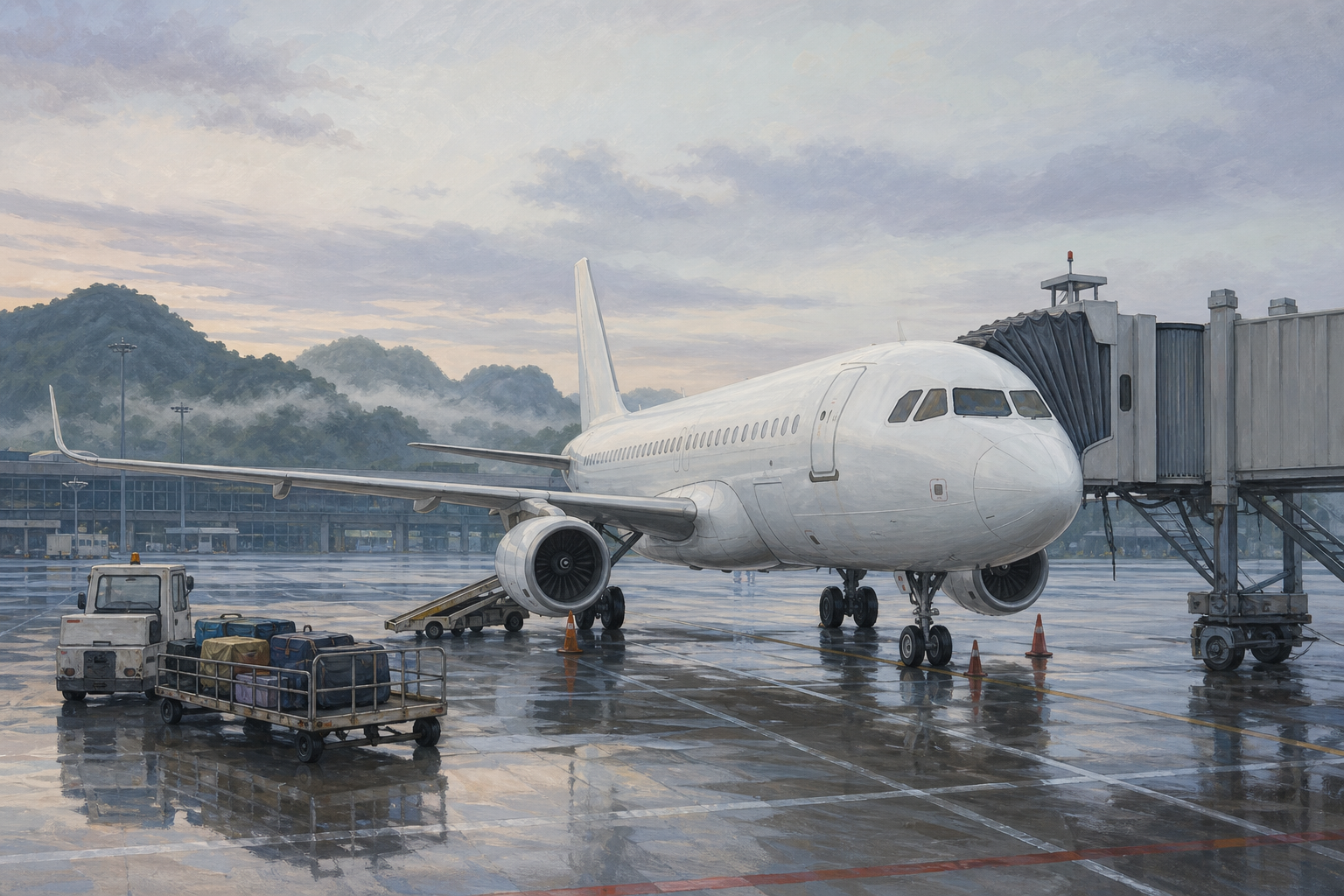
India and Vietnam doubled the number of airline seats permitted between the two countries on Monday 21 September. The cap went from roughly 8,000 passenger seats a week to 16,800, effective the day it was agreed.
That reads like a promise of cheaper flights. It is not. What changed is permission, and the useful part of the story is what airlines had already filed before the permission arrived. Four routes sit on this winter's schedule. Every one of them lands in Hanoi.
The ceiling was already in the way
Business Standard and Vietnam News Agency both reported the agreement on 21 September, and both put the new figure at just over 16,000 weekly seats against about 8,000 before. Vietnam News Agency gave the exact number as 16,800 and named the Vietnamese ambassador to India, Trinh Minh Manh, as present when it was settled. It is the second increase since 2024.
The timing makes sense once you look at what is already flying. Cirium data cited by Business Standard puts IndiGo and Air India at around 30 weekly flights to Vietnam and Vietnamese carriers at about 48 into India. That is 78 weekly flights, almost all on single-aisle aircraft seating between 180 and 230, which puts both sides hard up against the old number. The cap had to move before this winter's schedule could be flown. A less romantic reason than diplomacy, and a more reliable one.
Vietnam News Agency reported a target of lifting Indian arrivals from around 750,000 a year to 1.5 million inside one to two years, and the base under it is real. The Vietnam National Authority of Tourism counted nearly 750,000 Indian visitors in 2025, up 49 per cent on 2024, and the Statistics Office recorded 158,000 in January and February 2026 alone, up 71 per cent year on year against an 18.1 per cent rise in arrivals overall. India is growing roughly four times faster than the rest of Vietnam's inbound market.
Four routes, one city
Akasa Air opened Mumbai to Hanoi on 4 September as the first Indian carrier on the route. Its release lists QP0625 out of Mumbai at 5.35am into Hanoi at noon and QP0626 back at 1.30pm, four days a week on Monday, Friday, Saturday and Sunday, on a Boeing 737 MAX.
IndiGo follows on 25 October with a daily on the same pair, 6E1637 leaving Mumbai at 4.15am into Hanoi at 10am and the return at 7.05pm. It carries IndiGo Stretch, so the route gets a paid front cabin from Mumbai for the first time.
Vietnam Airlines filed the fourth. From 25 October it flies Hanoi to Ahmedabad four times a week on an A321, VN969 out at 5.35pm and VN968 back from Ahmedabad at 10.45pm, landing 4.35am. Ahmedabad has not had a non-stop to Vietnam before.
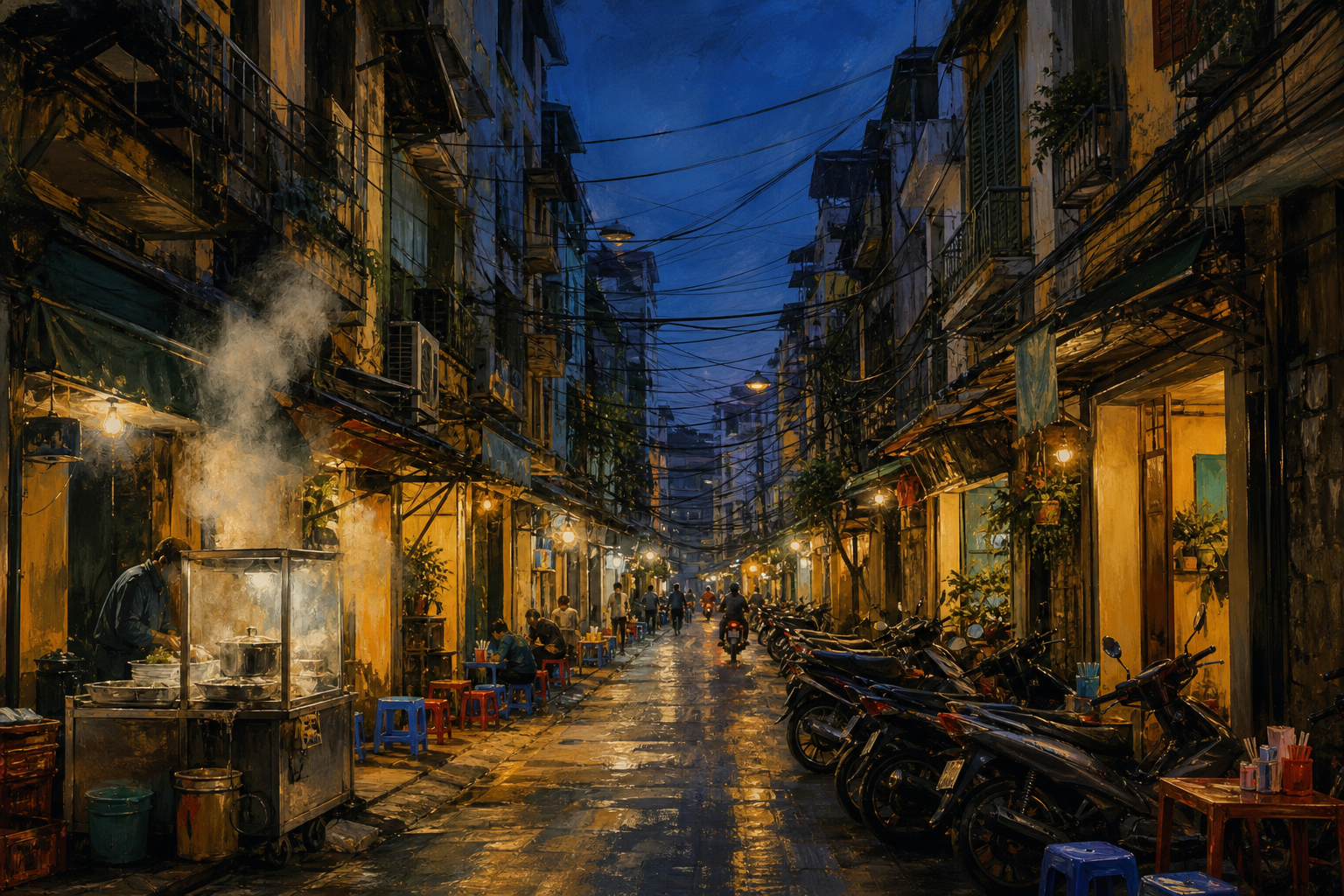
Add IndiGo's Delhi to Hanoi, started 20 December 2025, and its Kolkata to Hanoi, running since October 2019, and four Indian cities will have a direct flight into Hanoi by the end of October. That inverts what most Indian package itineraries assume, which is that Vietnam begins in the south.
Halong Bay at ₹2,928 justifies a Hanoi base, and four hours of cruising is at least honest about what it is: most of a day in a coach for a good afternoon on the water. The street food walk at ₹1,589 is the better value of the three and the one to do on a first evening, because the Old Quarter is hard to order in without help. Skip the ₹2,640 city tour if you have three days or more. Hanoi's centre is walkable and traffic makes a vehicle a liability.

Saigon is moving the other way
While Hanoi gains four routes, Ho Chi Minh City is losing service. IndiGo suspended Kolkata to Ho Chi Minh City in July and called it temporary, then left it out of the winter schedule. The aviation analysis site Network Thoughts read those filings as a consolidation of IndiGo's Vietnam flying onto Hanoi.
Its reading of the economics is that demand is not the problem. Ho Chi Minh City sits further from every Indian gateway, which stretches narrowbody costs without a fare premium to cover them, and Vietnamese carriers put enough capacity into the southern market to set the price there. A route can be full and still not be worth flying. We wrote earlier this month about Saigon's second airport opening at Long Thanh on 1 December with no Indian flight moving to it, and this is the same pattern from the airline's side of the ledger. None of it makes the city a worse place to spend a week. It makes it a place you are more likely to reach on one stop.
Both are ₹537, the cheapest serious half-day we sell in Vietnam. Cu Chi is the better one and worth the early start, though the tunnels are confronting rather than pleasant and children under about ten will not enjoy them. The Mekong trip is a long bus ride for a short boat, worth it on a fourth or fifth day when the city has run out.
Why more seats will not mean cheaper seats
IATA's jet fuel monitor has the global average at $194.90 a barrel, up 7.4 per cent on the week before. That is not a normal number, and Vietnam's carriers spent the first half of 2026 cutting capacity because of it.
Jet A-1 traded between $190 and $200 a barrel in March, and the Vietnamese industry put fuel at 35 to 40 per cent of operating costs. Vietnam Airlines suspended seven domestic routes from 1 April, took out 23 weekly flights, and projected international cuts of 4 to 18 per cent. Vietjet trimmed international capacity by about 11 per cent. The government advanced 8 trillion dong, around $304 million, into its fuel price stabilisation fund to slow the pass-through.
Airlines across the region responded by unbundling. From mid-March, carriers including Malaysia Airlines, Batik Air, All Nippon Airways and China Southern broke out a separate fuel surcharge of about $5 to over $380 a ticket depending on distance and cabin. Air France and Thai Airways folded it into the base fare and raised fares 5 to 20 per cent instead. Compare on the headline number alone and you pick whichever airline hid the surcharge better.
The rupee is the second thing working against you, at around 95.8 to the dollar on 25 September. Most aviation charges are quoted in dollars, so they cost more rupees than last year whatever the airline does.
A seat entitlement is a licence, not a schedule. Airlines fly aircraft, and aircraft burn fuel at $194.90 a barrel.
What to actually do
Plan the trip northwards. Going to Vietnam between now and March, build the itinerary with Hanoi as entry and exit and work south from there, because that is where the non-stops are. From Ahmedabad, price the 25 October Vietnam Airlines service before booking a connection through Delhi or Mumbai. It leaves at 10.45pm and lands at 4.35am, an unpleasant pair of times and still shorter than any one-stop.
Find the YQ or YR line on the quote before you compare prices. Two fares that look 2,000 rupees apart can be 15,000 apart once the surcharge is in.
Sort the e-visa before you pay for anything non-refundable. Vietnam changed its entry paperwork on 15 September and we covered what the new decree asks for. Flight availability is the easy part of this trip now.
And do not hold out for a fare war. The cap rising removes a legal limit, not a cost.
What is still unclear
No Indian airline has announced a new Vietnam route since the cap was lifted on 21 September. Every route above was already filed. The honest position today is that the increase has produced headroom and nothing else yet.
Sun PhuQuoc Airways is the one to watch and the one to discount for now. It is reported to be preparing a Mumbai service, but what it has actually flown to India is two charter pairs on 6 and 10 March 2026, to Mumbai and Vijayawada from Phu Quoc on an A321neo. Nothing is on sale as scheduled service. Chennai was named for later with no date.
The bigger unknown is fuel. Every capacity plan described here assumes the price comes down. If it does not, the seats that are now legal will stay theoretical, and the four-times-weekly routes will go before the dailies do.
Figures come from Business Standard and Vietnam News Agency, Cirium data as cited by Business Standard, the Vietnam National Authority of Tourism and the Statistics Office, Akasa Air's press release, AeroRoutes, VnExpress and IATA's jet fuel monitor, read on 27 September 2026. Schedules filed two months out move. Check the airline's own page before you pay.